Commercial Roof Coating · Yuma, AZ+1 (928) 430-5699
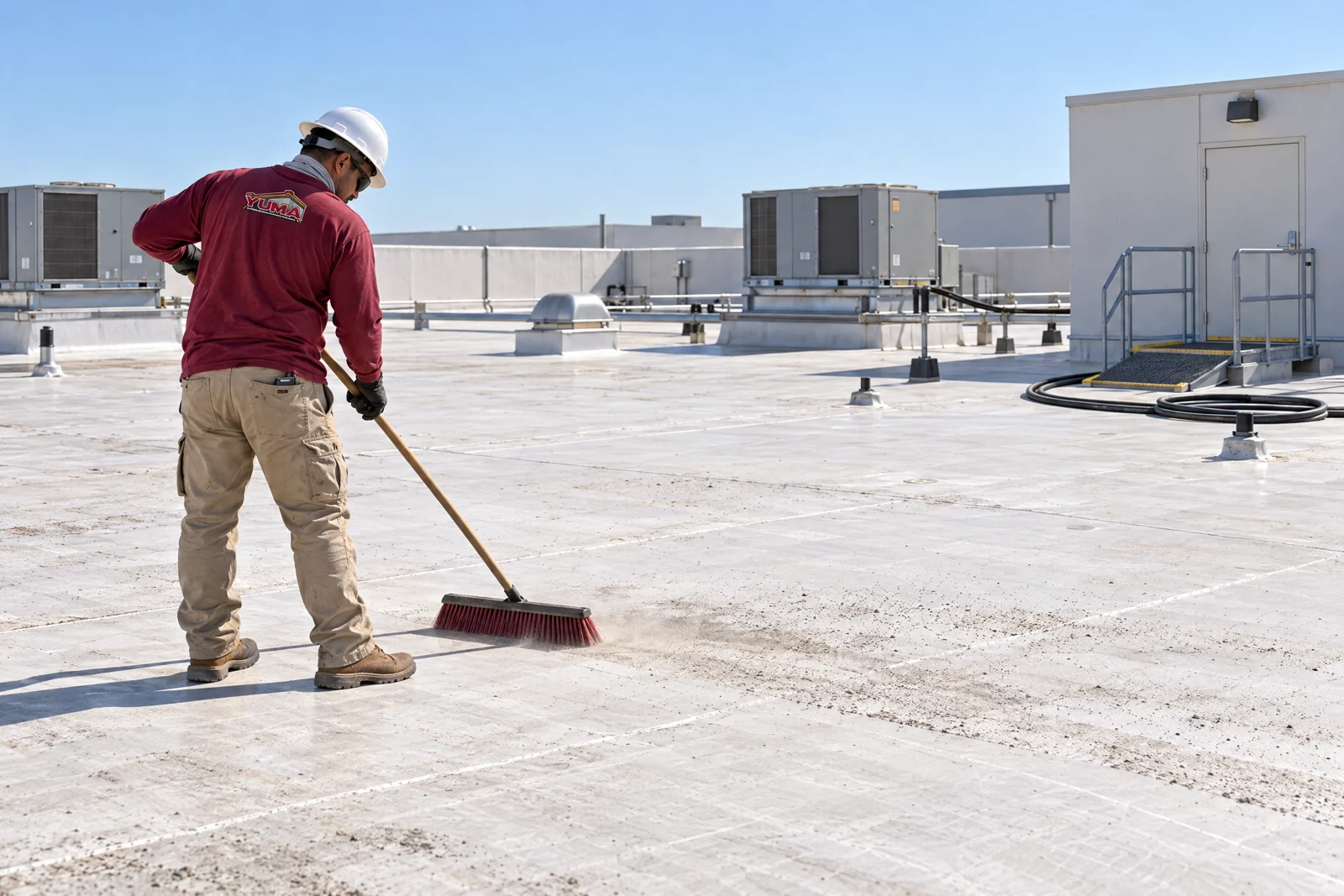
Worker clearing surface dust from a commercial roof

Commercial Roof Coating

Yuma Roof Coating Questions

What Needs Checking Before You Choose A Coating?

Yuma roof coating questions often concern drainage, moisture, repairs, application, building access, and roof care. We coat suitable commercial roofs in Yuma, AZ.

Commercial Roof Coating Work

What Does Your Commercial Roof Coating Service Include?

We inspect the roof, identify repairs, prepare the surface, and apply a coating suited to the existing roofing material. Preparation and repairs come before coating. Loose materials, leaks, and damaged areas need attention before the main coating goes on.
Can You Check the Roof on a Commercial Building We Just Purchased?

Yes. Contact us even if the previous owner left little information about the roof. Share any inspection records, repair receipts, or warranty documents you received. We can discuss the roof’s current condition and what needs checking before you commit to coating it.

Can You Help With Several Buildings at the Same Property?

Let us know how many buildings need attention and whether they have separate access points. We can discuss the inspection arrangements and your priorities. We would not assume that every building needs the same work simply because they share an address.

What Do You Need From Us to Arrange a Roof Inspection?

Start with the Yuma property address, your contact details, and the reason you are calling. Tell us who can provide roof access and whether the building has restricted areas. Photographs and maintenance records are helpful, but you do not need them before contacting us.

Checking the Existing Roof

Our Roof Only Leaks During Heavy Rain. Could Coating Help?

It could be part of the repair plan, but the leak needs to be found first. Tell us when it happens and where water appears inside. Coating should follow the necessary repairs, not be used as a way to avoid finding the problem.

Will Yuma’s Heat Dry Out Wet Insulation Before You Coat the Roof?

We cannot assume that it will. A dry roof surface does not prove the layers below it are dry. Moisture testing may be needed, and saturated insulation generally needs removal and replacement before coating. Hot weather is not a substitute for checking underneath.

Can a Commercial Roof With Gravel on Top Be Coated?

Not with a standard coating application over the loose gravel. Gravel-covered roofs need a closer review and may require special preparation or a different restoration method. We first identify the roof assembly rather than treating it like a smooth membrane roof.

What Would Make You Recommend Against Roof Coating?

Widespread wet insulation, damaged decking, or roofing that is coming apart can make coating a poor choice. A coating cannot rebuild those layers. We need to determine whether enough of the existing roof can be kept before recommending restoration.

Commercial Roof Coating Options for Yuma

Does a Dry Climate Make Acrylic the Best Choice?

Not automatically. Acrylic may work well on a compatible roof with good drainage, but local rainfall is only part of the decision. Water can still collect in low areas. We also check the existing material, previous coatings, and the product’s drying requirements.

What Would Make Silicone Worth Considering?

Silicone can provide protection from sunlight and resist standing water on a suitable commercial roof. That can make it useful where those conditions matter. We still check drainage and the roof underneath, because water resistance does not make a damaged roof ready for coating.

Does a Metal Roof Need Different Preparation From a Membrane Roof?

Yes. Metal roof preparation includes checking fasteners, panel connections, rust, and damaged sheet metal. Loose or missing fasteners need attention before coating. Rust treatment and suitable primers may also be required. The coating should protect a properly repaired metal roof, not hold loose panels together.

Does Recoating a Foam Roof Mean Adding More Foam Everywhere?

No. If the existing foam is sound, the work may mainly involve repairs and renewing its protective coating. Wet, exposed, or damaged foam needs separate attention. We assess those areas before deciding whether additional foam is needed and where it should be applied.

Heat and Roof Performance

What Is a Reflective Roof Coating Supposed to Do?

It reflects more sunlight instead of letting the roof absorb as much heat. This can lower the roof’s surface temperature and reduce heat entering the building. Reflectivity is useful, but it is only one part of choosing a coating that suits your roof.

Could a Reflective Coating Help a Warehouse Without Air Conditioning?

It may reduce heat entering through the roof and improve indoor conditions. Without air conditioning, though, there are no cooling-system savings to claim. A reflective roof also does not control the building’s temperature by itself or replace ventilation and other heat-management measures.

Our Roof Is Already White. Is There Still a Reason to Coat It?

Possibly, but making it white again is not enough reason on its own. We would check whether the existing protection is worn or damaged. A roof that is already reflective may have less room for cooling improvement than a dark roof.

Does a Cooler Roof Surface Mean the Inside Will Be Just as Much Cooler?

No. Roof-surface temperature and indoor temperature are different measurements. Insulation and the rest of the building affect how much roof heat reaches the interior. We would not turn a claim about surface temperature into a promise about room temperature or utility bills.

Wind, Dust, Rain, and Scheduling

Can a Dust Storm Delay Coating Even if It Does Not Rain at Our Building?

Yes. Strong winds can make work unsafe, and dust can contaminate a prepared roof. If dirt settles before coating, the surface may need cleaning again. We need suitable working conditions and a clean surface, not simply a forecast without rain.

Can the Roof Be Too Hot to Coat?

Yes, depending on the product. We check the coating’s application limits and the actual roof conditions rather than relying only on the air temperature. Work may need to take place during a different part of the day when those conditions are suitable.

Can You Coat a Roof During Monsoon Season?

A project may be possible when the forecast provides enough suitable weather. Monsoon storms can bring rain, wind, and dust, so scheduling needs care. The selected coating must have time to dry or cure as required before rain exposure.

Will a Thick Silicone Coating Fill the Low Spots Where Water Collects?

A standard silicone coating is not a roof-leveling material. Low areas may need drainage corrections or other roofing work. We check where the water goes and why it collects. Applying more coating does not replace a plan for getting water off the roof.

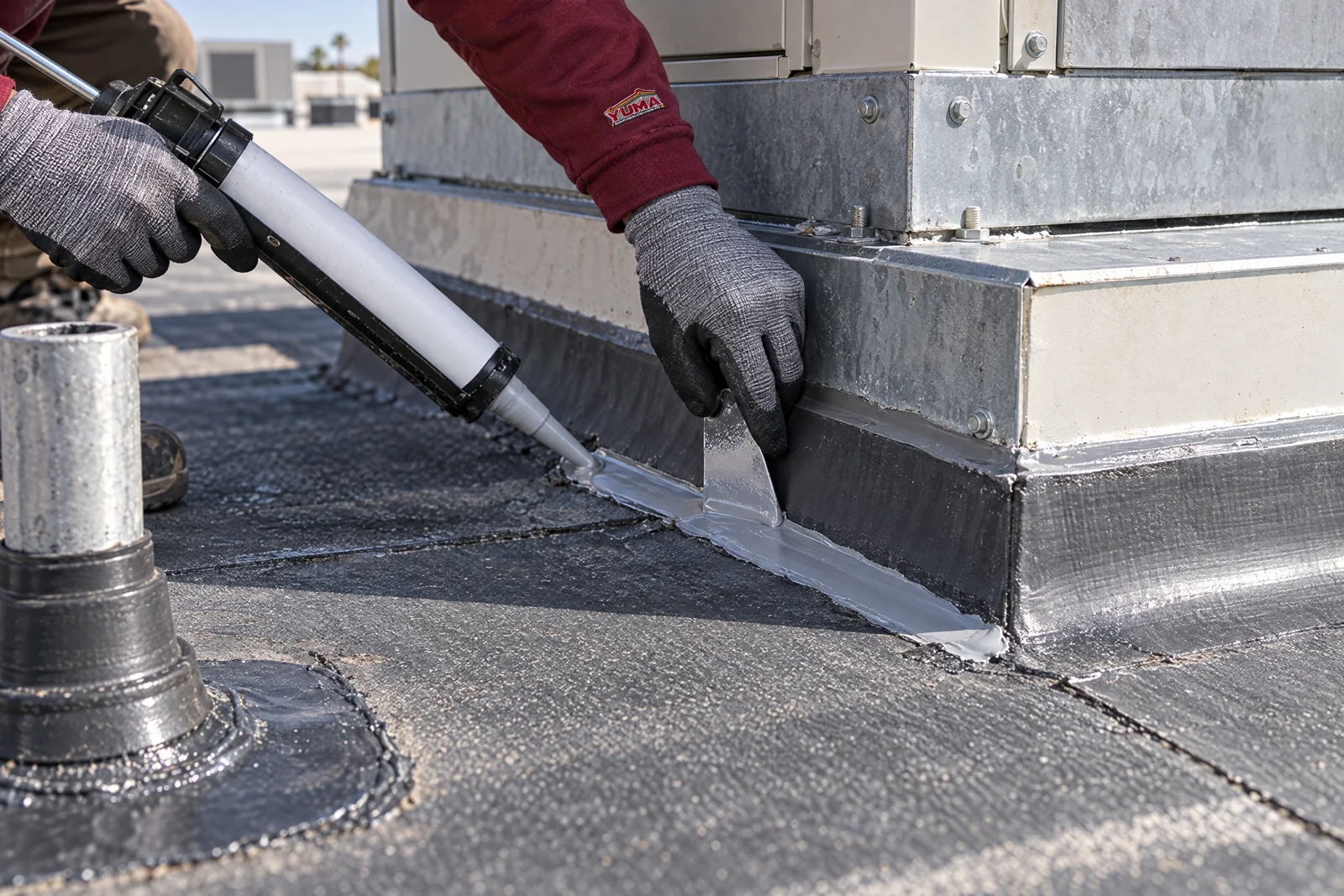
Gloved hands preparing flashing around a commercial roof curb

Preparation and Application

What Is the First Step in Your Coating Process?

The first step is Inspect Your Roof. We identify the roofing material, check its condition, and determine what needs repair. That inspection guides the preparation and coating choice. We do not select the product first and then try to make the roof fit it.

Can Existing Roof Patches Stay Under the New Coating?

Some can, but their condition and compatibility need checking. Loose repairs need attention, and certain materials require special preparation. For example, an asphalt-based surface may need a bleed-blocking primer beneath a white coating. Each old repair needs more than a quick glance.

How Do You Know Enough Coating Has Been Applied?

We follow the selected system’s coverage and thickness requirements. A roof can look fully covered before it has the required amount of material. Thickness checks help confirm the application rather than relying on color or appearance alone.

Do Roof Edges and Equipment Bases Get the Same Treatment as the Open Roof?

Not always. Connections around pipes, equipment bases, drains, and roof edges may need sealant, reinforcement, or other detail work. Those materials can differ from the coating used across the open surface. The connections must be properly treated before the job is considered complete.

Planning Around Your Business

What Should We Tell Tenants Before Roof Work Starts?

Discuss the planned work hours, roof-access restrictions, delivery arrangements, and any areas that need to stay clear. Identify one person who can handle questions during the job. We can review those arrangements with your property team before work begins.

Can Loading Docks and Customer Parking Stay in Use?

That needs to be worked out for the property. Tell us which areas must remain available and when deliveries arrive. We can discuss access and protection before choosing the work sequence. Do not assume every parking space or entrance will remain available throughout the job.

Should We Mention Plans to Install Solar Panels?

Yes, before either project is scheduled. Roof preparation, panel supports, coating, and panel installation need coordination. We also need to consider access for future roof care. On foam roofs, planning panel supports and protective walkways is especially important.

Will Our Air Conditioning Need to Be Shut Off?

That should be decided during planning, not assumed. Tell us where the air intakes are and which equipment must remain running. Any temporary changes need coordination with your facility team and HVAC contractor. Do not shut down equipment or block intakes without an agreed plan.

Benefits of Coating Your Roof

Where Can Coating Save Money Compared With Replacement?

The main opportunity is keeping roofing that still has useful life instead of removing and rebuilding it. That can reduce material and labor costs. The roof must still qualify for restoration; keeping damaged materials just to reduce the price is not a sound approach.

How Can Coating Reduce Disruption to the Building?

When most of the roof stays in place, there may be less demolition, debris handling, and work associated with a full tear-off. Cleaning and repairs still need planning, but suitable coating projects can involve less interruption than rebuilding the entire roof.

Does Coating Mean Less Roofing Goes to the Landfill?

It can, because sound roofing remains on the building rather than being discarded. The amount of waste avoided depends on how much of the roof can stay. Coating is not a promise of zero waste, but it may avoid unnecessary removal of usable materials.

Can Coating Give Us Another Restoration Option Later?

Often, yes. A well-maintained coating may be renewed with a compatible product when its condition allows. The roof still needs inspection and preparation before another application. Future recoating is an option to assess, not a guarantee that the roof will never need replacement.

Cost, Timing, and Warranties

Why Can’t the Cost Be Based on Roof Size Alone?

Square footage does not show how much repair or preparation is needed. Removing wet materials, fixing seams, and preparing old coatings can change the work involved. Product choice and required application thickness also affect cost, even on two roofs of the same size.

How Soon Can Maintenance Staff Return to the Coated Roof?

Access needs to wait until the coating has cured enough for the intended use. That timing varies with the product and conditions. We need to account for equipment servicing when planning the job rather than assuming the roof will be ready the next morning.

Does a Coating Automatically Come With a Roof Warranty?

No. Available coverage depends on the product, selected system, and installation requirements. Ask which warranty, if any, applies to your specific job and review its terms. A product description mentioning warranties does not establish that every installation qualifies for the same coverage.

What Should We Do if Our Existing Roof Still Has a Warranty?

Share the paperwork before coating work is planned. Adding a coating could affect existing coverage, so the warranty provider’s requirements need checking first. Do not assume a new surface treatment leaves the original warranty unchanged.

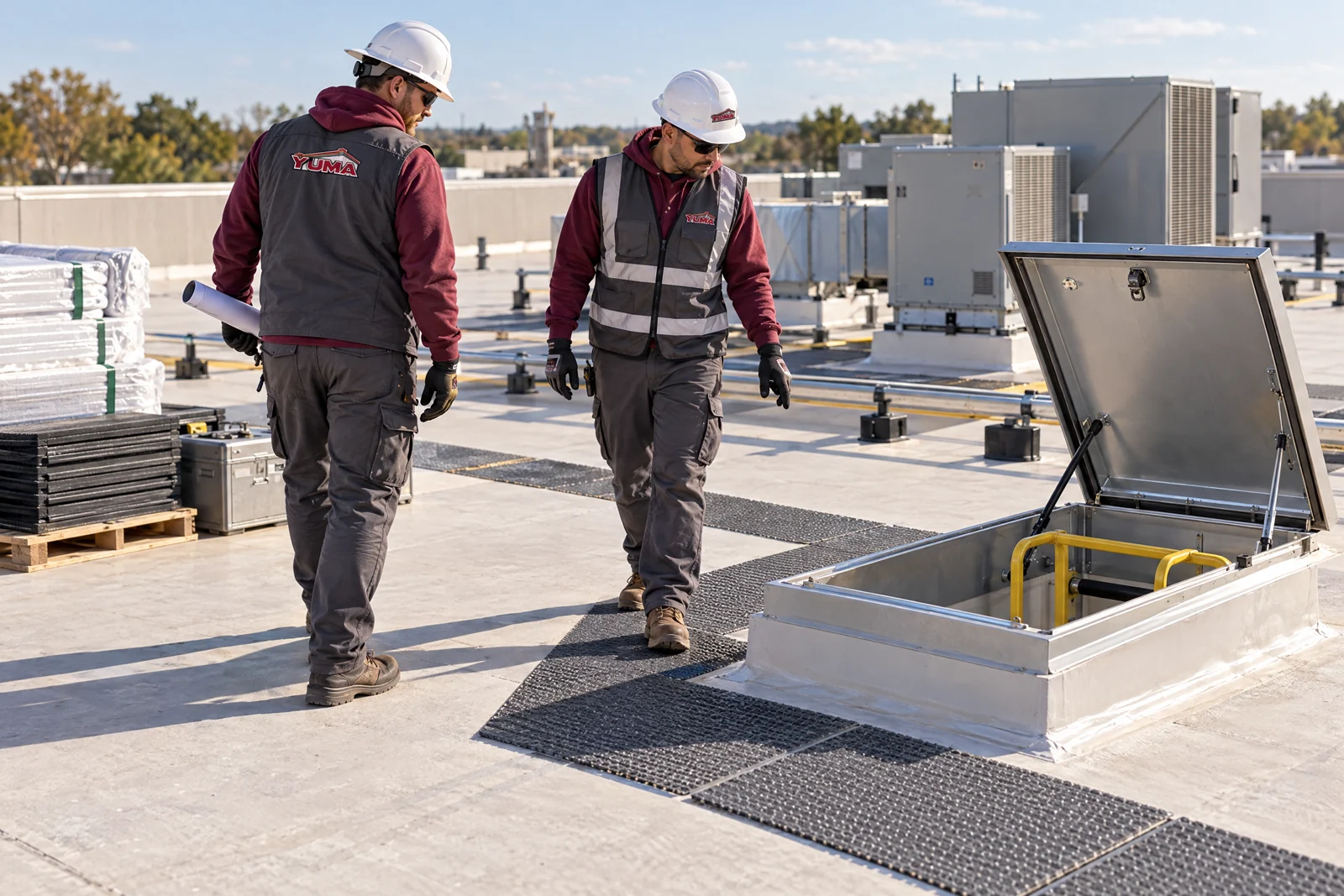
Roof access and material staging around commercial rooftop equipment

Care After Coating

The Coating Looks Gray From Dust. Does It Need Replacing?

Not necessarily. Surface dirt can change the appearance without showing that the coating has failed. We would check for actual wear, loose areas, and damage before recommending more coating. Cleaning may be the right starting point rather than covering the dirt with another layer.

Can Our Maintenance Crew Patch a Small Cut With Roof Sealant?

Check the coating type and approved repair method first. Repair products are not interchangeable, particularly on silicone-coated roofs. The area also needs proper preparation. Contact us with the location of the damage and any product information rather than applying an unknown sealant.

What Should Be Checked After Wind Blows Debris Onto the Roof?

Once access is safe, check for damage and clear debris from drains and nearby low areas. Even an undamaged coating needs working drainage. Leaves, dirt, and other material can collect where water is supposed to leave the roof.

How Do We Know Whether the Roof Needs Repairs or a Full Recoat?

The decision should follow an inspection, not just the coating’s age. A few damaged details may need local repairs, while broader coating wear may call for renewal. Before recoating, we also need to confirm that the existing roof remains a suitable base.

Get A Free Estimate For Your Roof

Tell us about the roof material, known leaks, previous repairs, and building access. We will check which work fits your commercial property.

Call Us

Before You Go

Want To Talk About The Roof?

Leave a name and phone number, or call directly when you are ready.

Call Us

Read our Privacy Policy.