Somerton
Somerton commercial roof coating starts with roof access, occupied areas, and delivery routes that shape a safe preparation and application sequence.
Somerton Roof Coating
Commercial Roof Coating
Can Roof Work Fit Your Building’s Schedule?
Yuma roof coating service areas include Somerton, San Luis, Fortuna Foothills, Wellton, and Downtown Yuma, AZ. We inspect and coat suitable commercial roofs.
We coat commercial roofs in five approved Yuma-area service areas. Each property needs an access plan, jurisdiction check, roof-specific sequence, and workable starting point before application and material movement begin.
Somerton commercial roof coating starts with roof access, occupied areas, and delivery routes that shape a safe preparation and application sequence.
Somerton Roof CoatingSan Luis properties may need separate access planning for roof entries, customer areas, and facility staff while coating work moves across the building.
San Luis Roof CoatingFortuna Foothills roof coating connects equipment access, surface preparation, and a workable weather window before materials reach the roof.
Fortuna Foothills Roof CoatingWellton coating work can cover multiple structures, so each roof needs its own entry route, condition check, and operating plan.
Wellton Roof CoatingDowntown Yuma commercial roofs may require coordination around occupied spaces, rooftop equipment, customer movement, and protected access routes.
Downtown Yuma Roof CoatingThe address matters because access, operations, jurisdiction, and weather windows affect how a commercial roof is prepared, coated, and returned to use.
An address identifies the jurisdiction, but permit or code needs depend on the property and coating scope. Share restricted areas, keys, escorts, ladders, and separate roof entries so access requirements can be checked before preparation and material movement begin. The roof should not be treated as one open work area.
A coating job has to fit the building’s working day. Identify tenants, loading docks, customer parking, delivery times, and areas that must stay clear. The sequence can then account for protection, movement, and work zones that cannot be blocked during preparation or application.
Wind can make roof work unsafe, while dust can settle onto a prepared surface before coating. If contamination occurs, cleaning may be needed again. A dry forecast is not enough; the roof must stay clean and conditions must suit the selected coating during the application window.
Rain, wind, and dust can affect preparation, application, and curing. A project may be possible during monsoon season when the forecast provides a suitable window. The selected product still needs enough time before rain exposure, and roof access should remain controlled until the coating is ready.
Several buildings at one address do not automatically share one roof scope. List each structure, roof entry, material, restriction, and priority. Separate inspection arrangements help identify which areas can be coated, which need repair first, and how people and materials move between buildings.
Rooftop equipment affects access, protection, staging, and work timing. Identify air intakes and equipment that must remain running before coating begins. Do not shut units down or block intakes without an agreed plan involving the facility team and HVAC contractor.
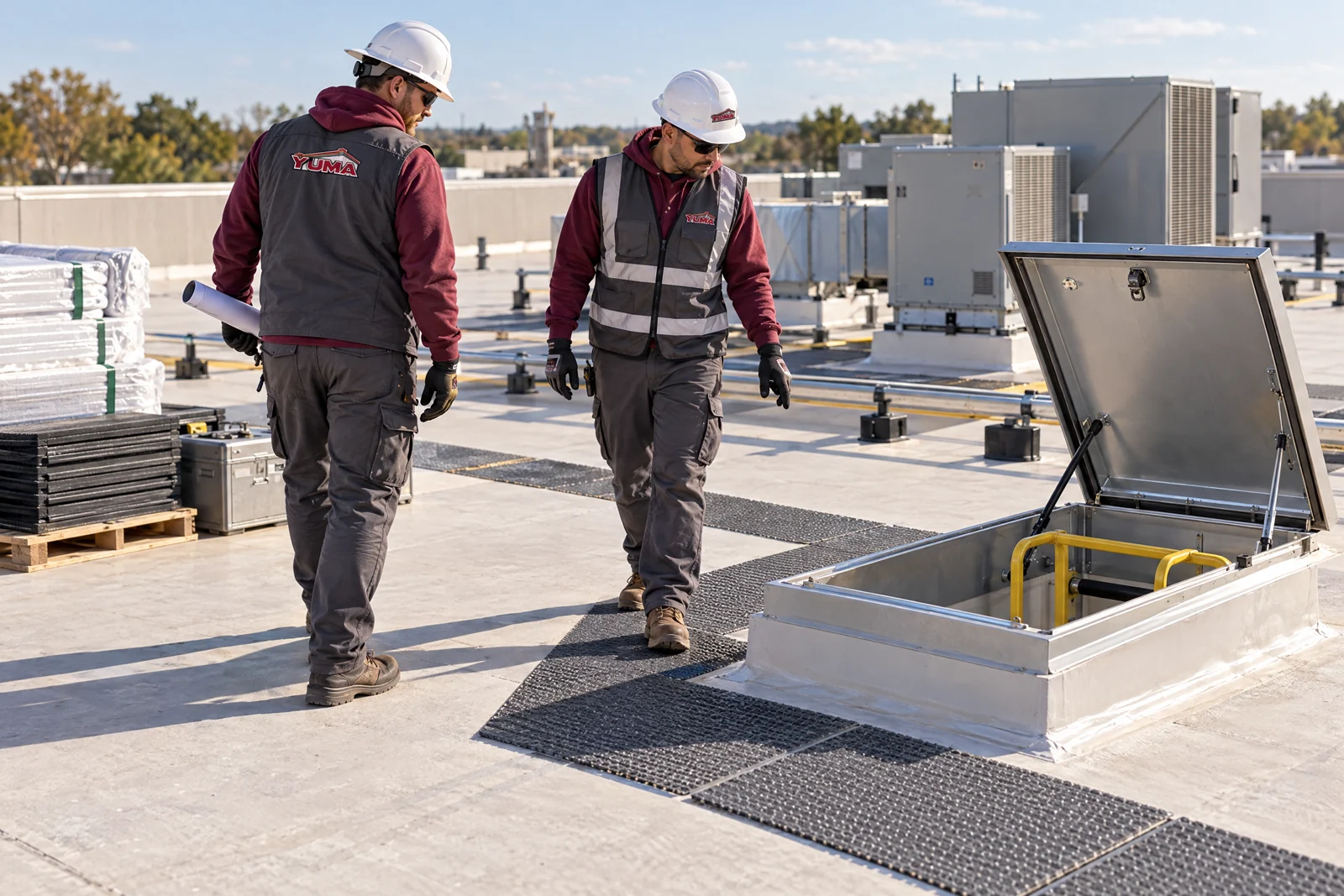
These answers cover practical conditions that can change a commercial coating visit: clean preparation, safe access, occupied operations, equipment, jurisdiction, and a workable weather window.
Yes. Strong wind can make roof work unsafe, and dust can contaminate a prepared surface even when the roof stays dry. A clean surface is part of coating readiness, not a cosmetic preference.
If dirt settles before application, the affected area may need cleaning again. We check actual roof conditions and the selected coating’s requirements instead of relying only on a no-rain forecast. The property team should allow for a clean, workable surface before access is opened for coating.
A project may be possible during monsoon season when the forecast provides a suitable work window. Rain, wind, and dust can affect preparation, application, and the time needed for the coating to dry or cure.
The selected product needs enough time before rain exposure. We schedule around the roof’s condition and available weather window rather than treating the season as an automatic yes or no. Rain exposure before cure can change the work window, so access stays controlled.
It can. The property address identifies the jurisdiction, while the roof condition and work scope determine what project requirements may apply. We do not assume one property’s process covers another property.
Share the address and planned work details. Jurisdiction-specific permit or code requirements need confirmation before they are presented as part of the coating scope, because they can affect preparation, access, or scheduling. That check belongs to the property and scope, not a generic assumption about every Yuma-area roof.
Start by listing each building, its roof entry points, and the person who can provide access. Separate buildings may have different roof materials, restrictions, repair needs, or safe routes.
Tell us which areas are restricted and whether access points operate on different schedules. We can keep inspection and coating tied to each building instead of assuming one address means one roof. A single contact can keep entry decisions clear when buildings operate differently.
They may remain available in part, but that depends on the property and work sequence. Tell us which docks, entrances, drive lanes, and parking areas must stay open, along with delivery times.
Access and protection need to be discussed before the sequence is selected. Do not assume every space remains available throughout surface preparation, material movement, or application. This may require staged areas or temporary changes agreed with property staff.
Tenants should know the planned work hours, roof-access restrictions, delivery arrangements, and areas that need to stay clear. Give them one clear contact for questions during the work.
The property team should identify sensitive entrances and occupied areas before coating begins. That information connects roof access and material movement with daily operations and helps protect routes used by tenants and customers. Tenants should also know who can approve access changes when conditions shift.
HVAC intakes need to be identified before work begins. Ask your facility team which equipment must remain running and where air intakes are located; do not shut equipment down or block intakes without an agreed plan.
Temporary changes may require coordination with the facility team and HVAC contractor. Equipment locations can affect access, protection, staging, and the time selected for preparation or coating. Equipment service routes and sensitive intakes should be marked before surface preparation begins.
An inspection separates coating-ready areas from repairs or replacement needs. Widespread wet insulation, damaged decking, or roofing that is coming apart can make coating a poor choice because a coating cannot rebuild those layers.
We then connect each area to access and operations. Keeping sound roofing in place may reduce tear-off, debris handling, and disruption, but only where the existing roof can support restoration. The same inspection should identify drainage, penetrations, and other details that coating cannot rebuild.
Share the property address, roof-access details, and known operating constraints so the commercial roof coating work can start with the building’s actual conditions and access needs.