Open Seams And Fasteners
Loose or open seams can let water reach the assembly, while loose fasteners can leave panels unstable. Fastening and seam work come before coating.
Commercial Roof Coating
How Will Loading And Roof Work Share The Property?
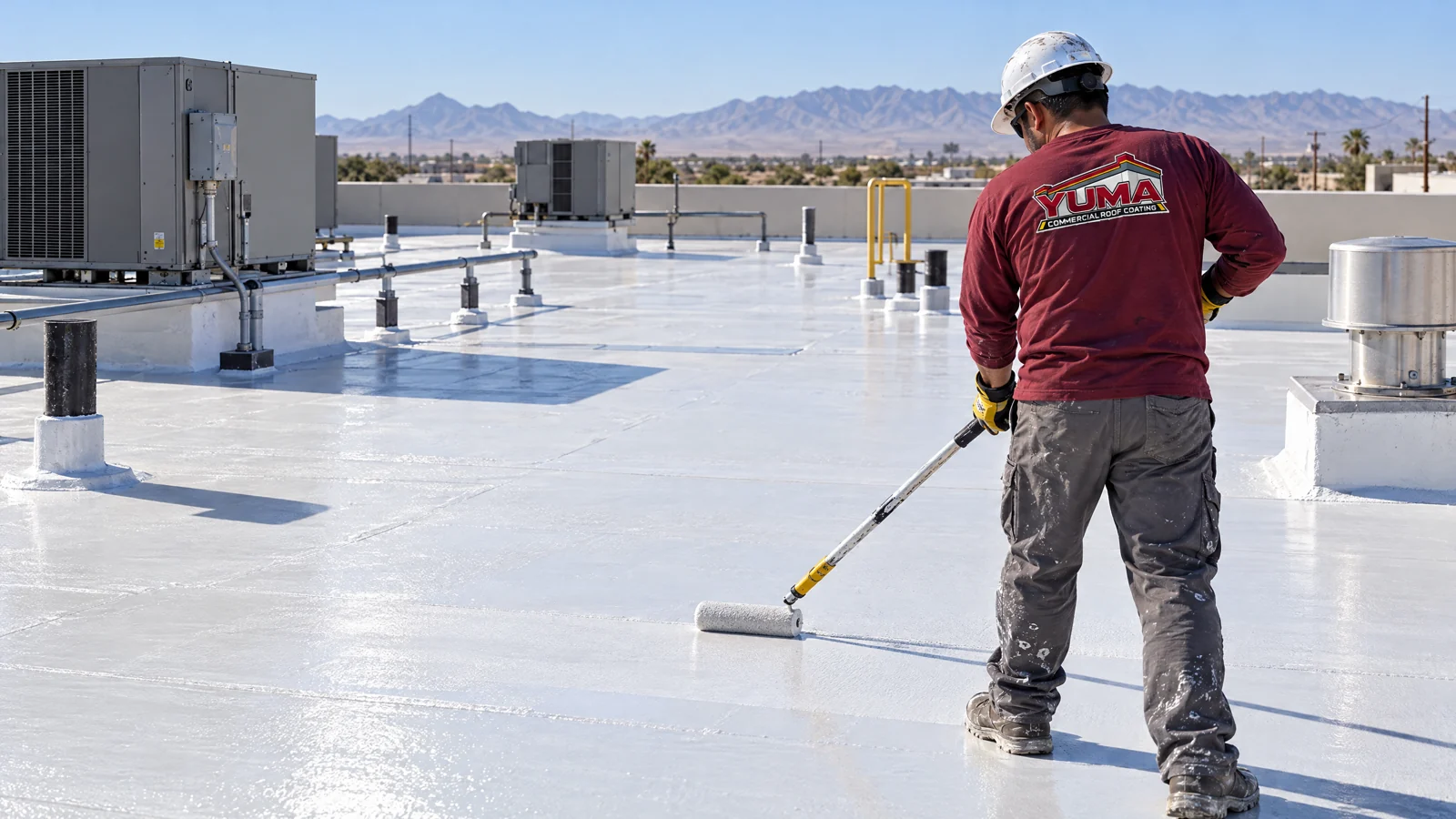
We provide San Luis roof coating for commercial buildings, coordinating loading activity, material staging, rooftop access, and HVAC-intake protection.
San Luis roof coating must fit the building’s working day. Loading docks, deliveries, rooftop equipment, and customer routes belong in the sequence.
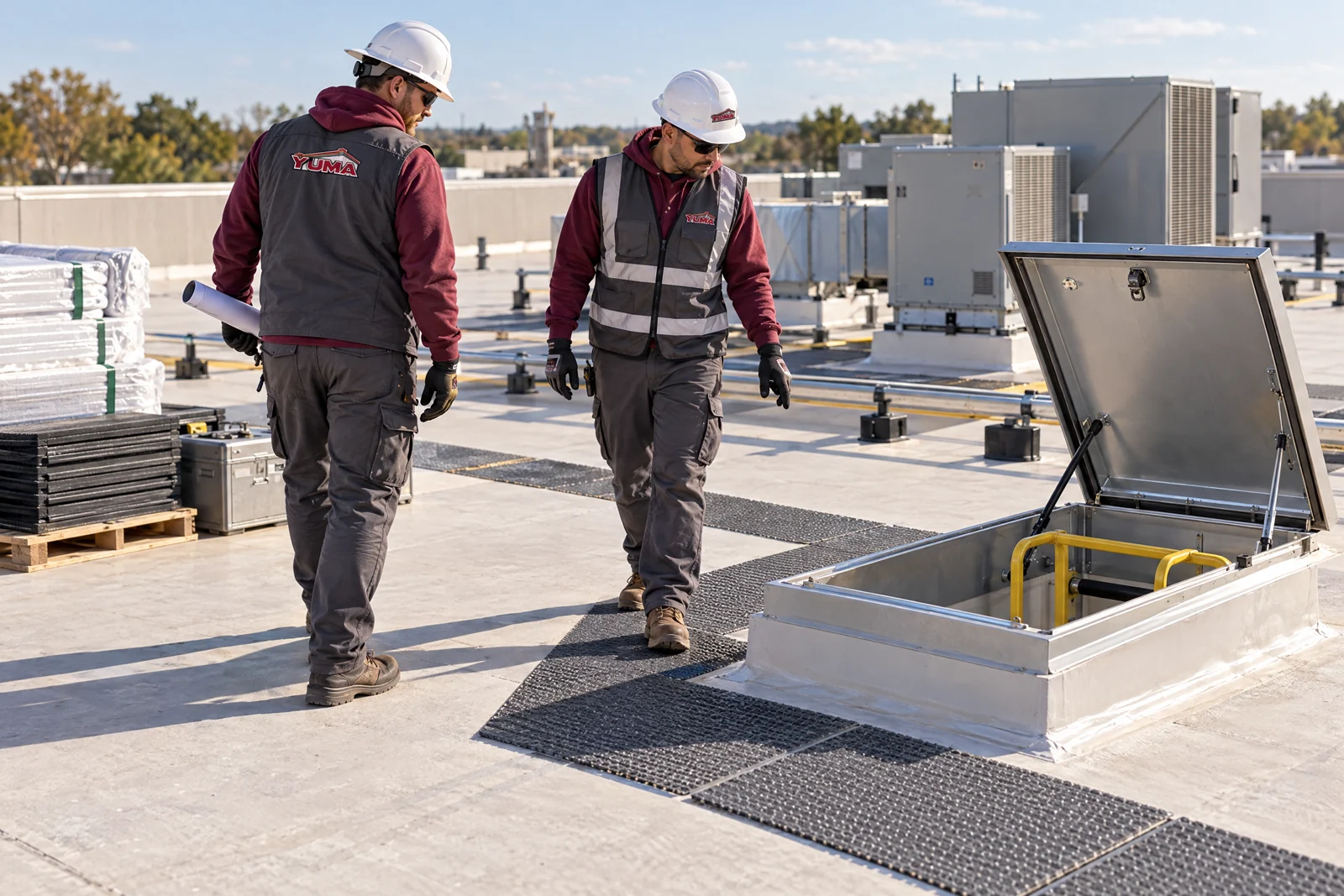
We identify material staging, roof access, and loading areas that must remain available. Separate roof zones keep preparation and coating from closing every access point at once.
HVAC intakes and equipment bases need protection. NWS Phoenix warns dust storms can bring 40–60 mph gusts, so wind can move materials or contaminate a prepared surface before coating.
A coating belongs on a suitable, repairable roof. These conditions guide whether San Luis restoration starts with detail repairs, preparation, another system, or replacement.
Loose or open seams can let water reach the assembly, while loose fasteners can leave panels unstable. Fastening and seam work come before coating.
Rust is not a surface detail to hide. Metal areas need a condition check, suitable corrosion treatment, and compatible preparation before coating repaired panels.
Worn coating and previous patches may behave differently. We check repair soundness, compatibility, and whether an old asphalt-based area needs a bleed-blocking primer. We do not assume every old repair accepts the new system.
Water collecting in a low area calls for a drainage review. More coating does not level a roof or move water away from drains and scuppers.
A dry surface does not prove lower layers are dry. Wet insulation, damaged decking, or separating roofing may require removal, repair, or replacement instead of coating.
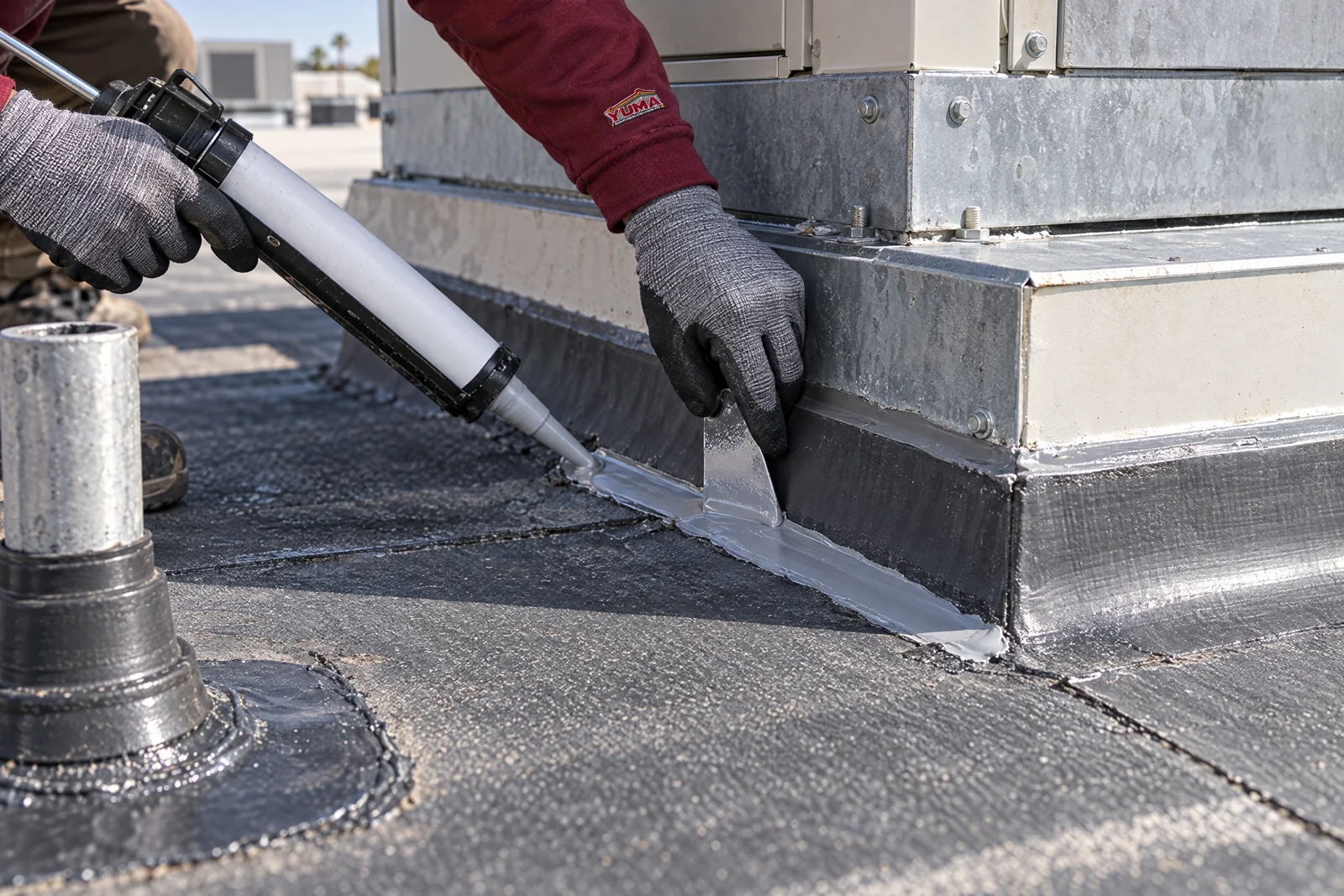
Coating is useful when the existing commercial roof is sound enough to restore and the selected system matches its condition. The benefits depend on that starting point.
When the existing roof is attached, dry, and repairable, coating can protect it instead of removing useful materials. Keeping suitable roofing in place can create a cost opportunity, but inspection decides whether enough qualifies.
A suitable coating project may avoid demolition, hauling, and debris movement from a full tear-off. That can reduce work around active docks and customer routes, although repairs and staging still require control.
When sound roofing stays in place, less usable material may reach a landfill than with full removal. The amount avoided depends on condition and how much can remain safely; coating is not a zero-waste promise.
A compatible, maintained coating may be renewable when its condition allows. Future recoating is an option to inspect later, not a promise against major repair or replacement. Maintenance includes compatible repairs and drainage checks.
The roof material and its condition determine which coating service belongs in the conversation. Each option starts with inspection and preparation, not product selection alone.
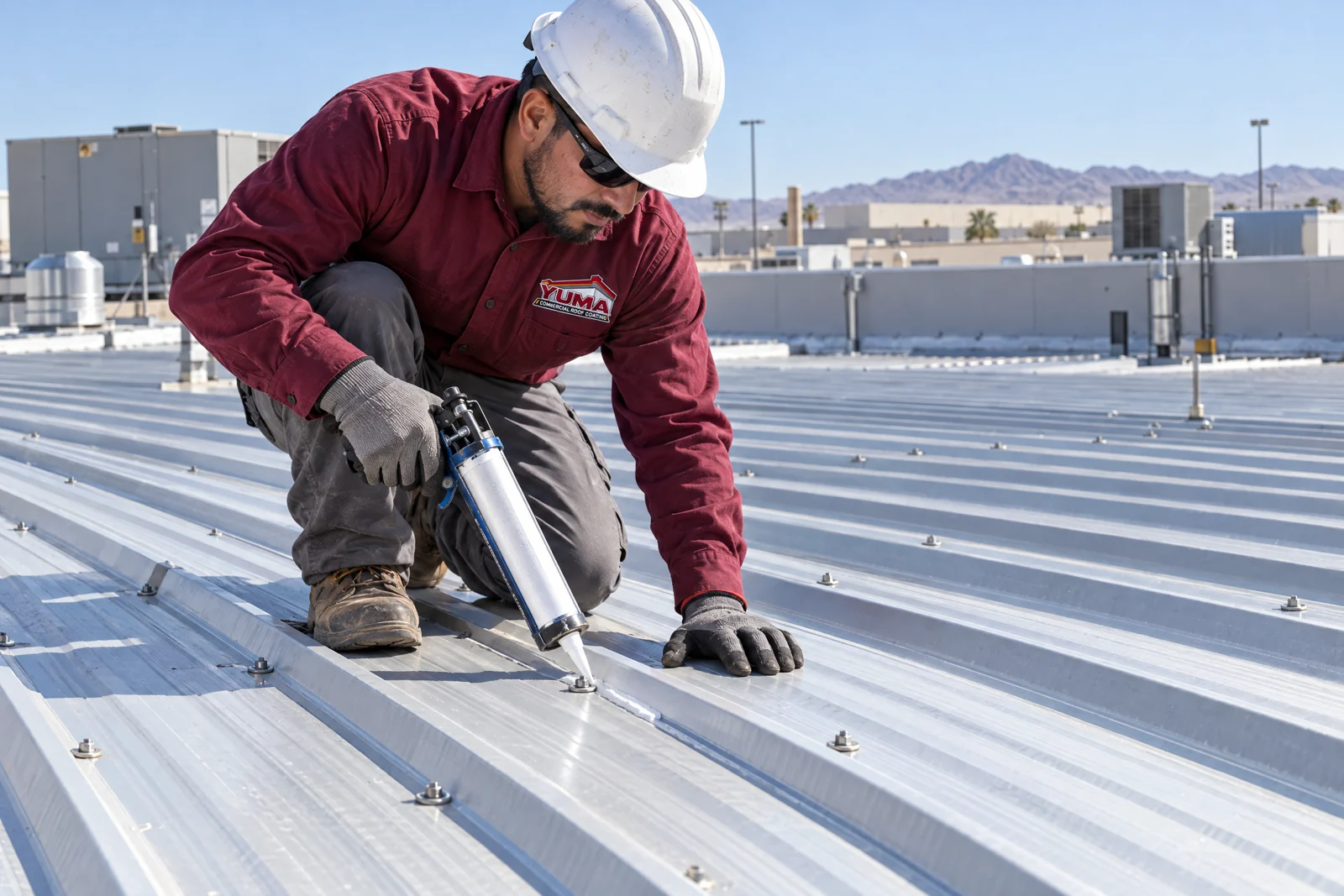
Checks panels, seams, fasteners, corrosion, and penetrations before repaired metal receives compatible preparation and coating. Confirm panel movement and detail transitions before the coating sequence is set.
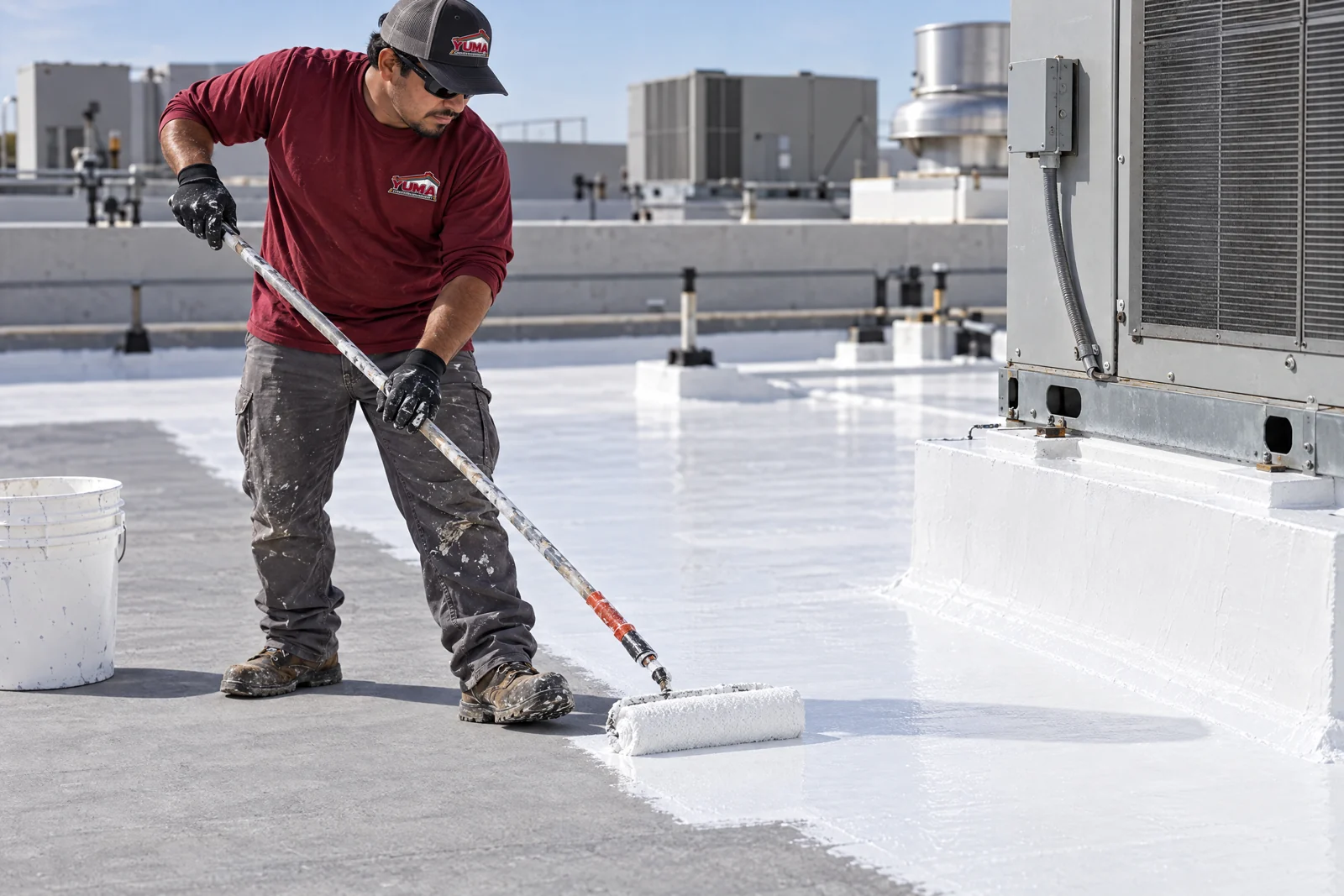
May suit a compatible low-slope roof where moisture, drainage, and ponding conditions have been investigated first. Ponding and substrate moisture still need attention before silicone is applied.
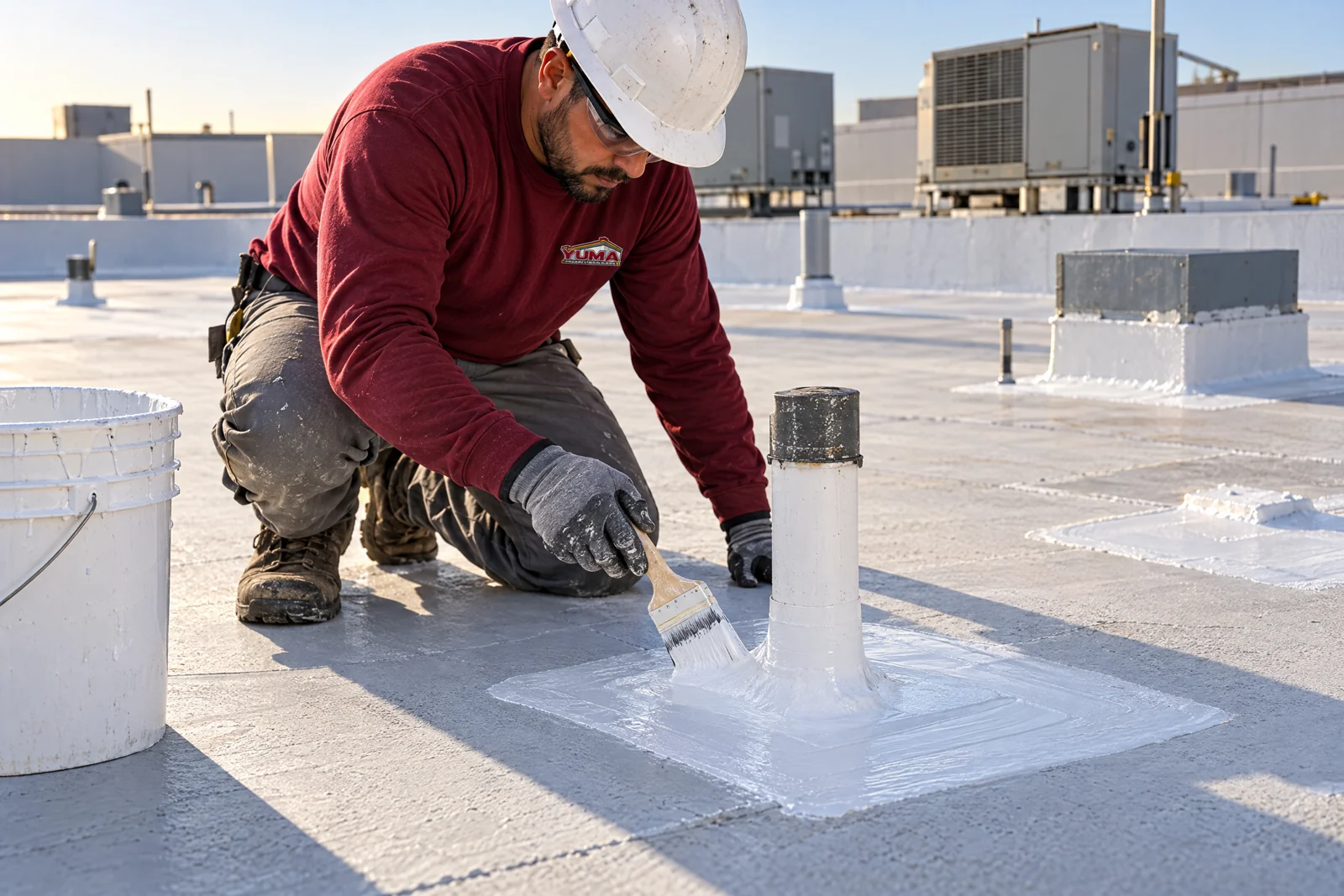
Can be considered on compatible roofs with good drainage, proper preparation, and weather conditions that allow the coating to dry. Previous coatings and application temperatures remain part of the suitability check.
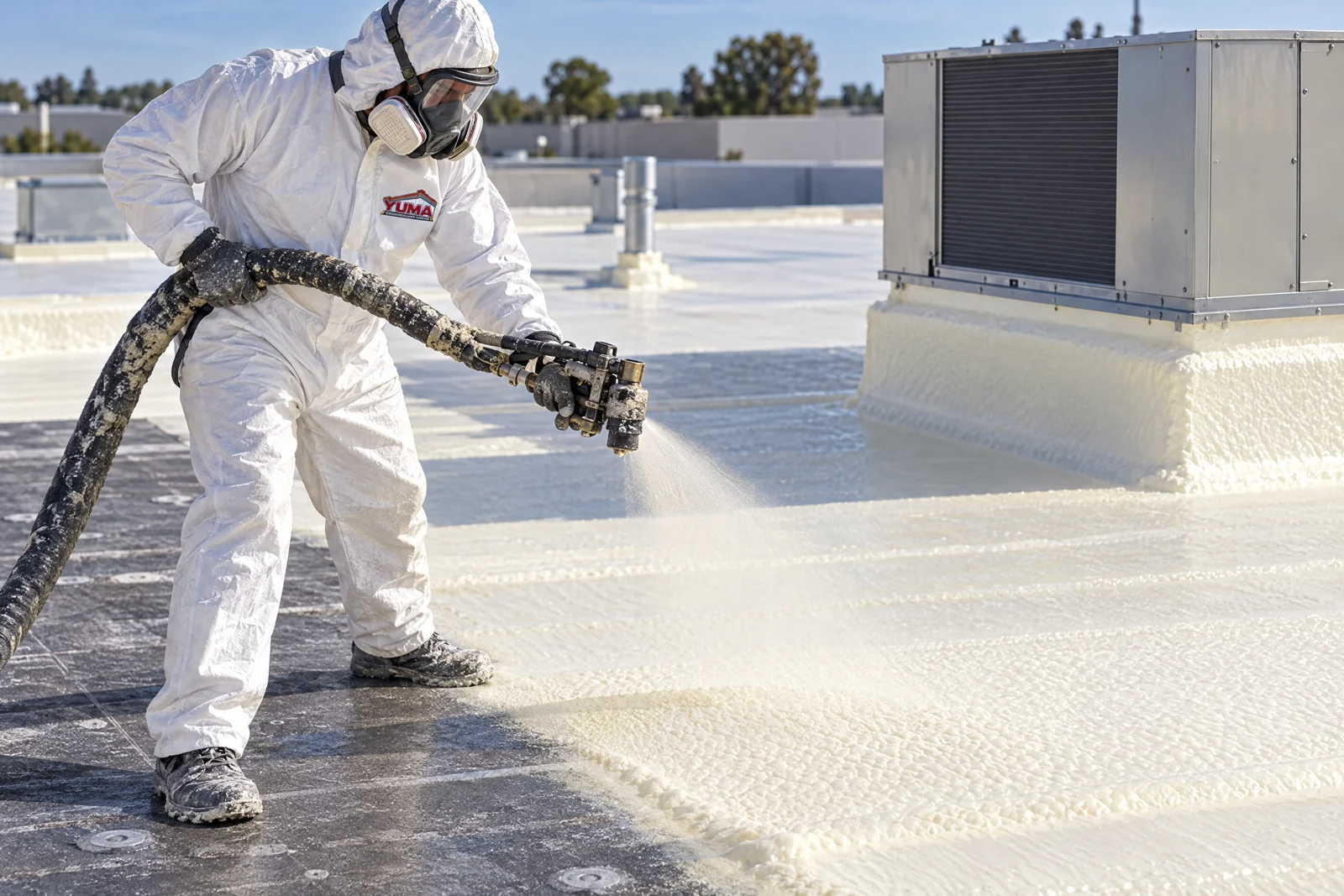
Focuses on substrate condition, exposed or wet foam, detail repairs, overspray controls, and a protective topcoat plan. Rooftop equipment and overspray controls must be included in the access plan.
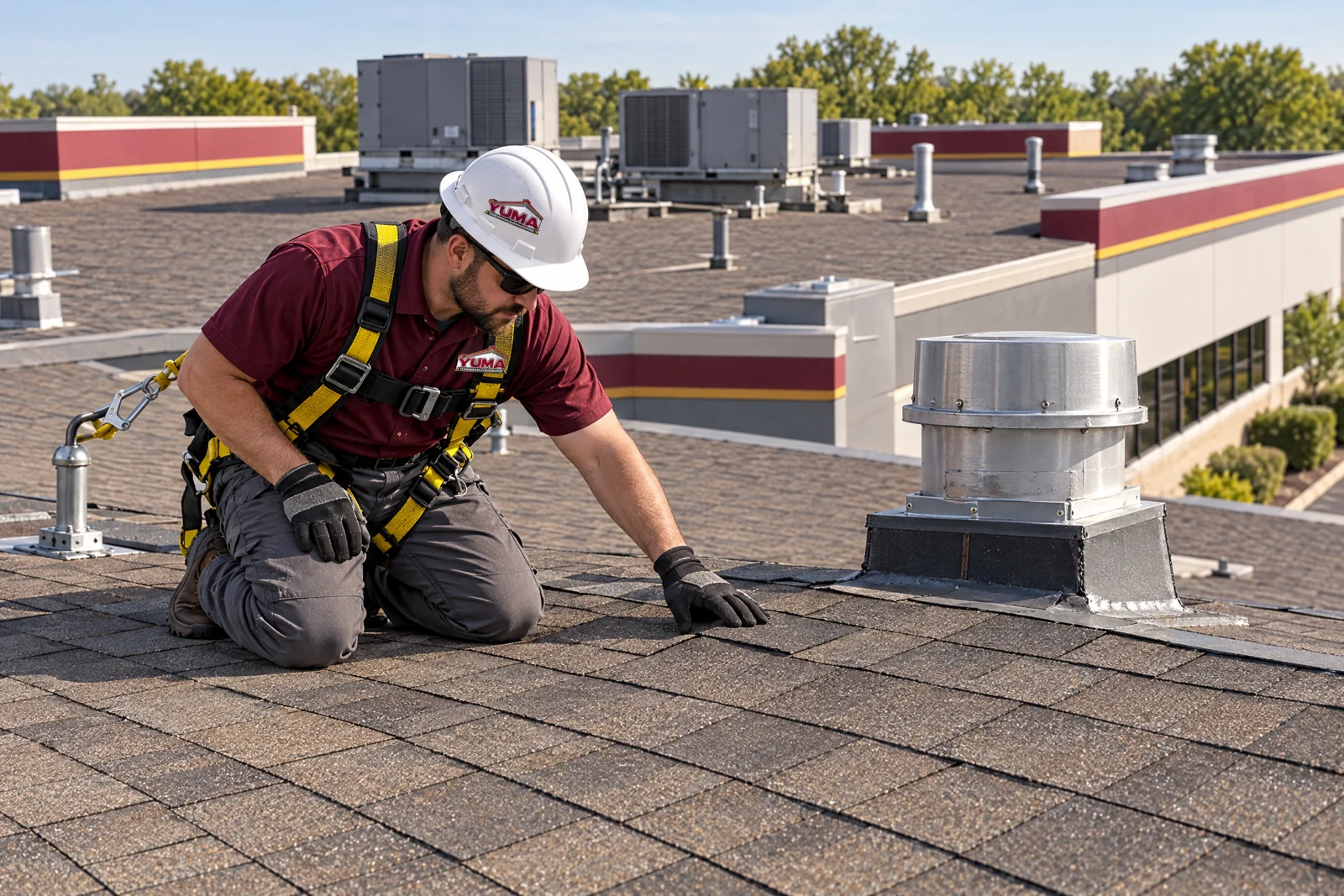
Requires a narrow suitability check, manufacturer compatibility review, and code considerations before any commercial shingle work. Repair or replacement may be more appropriate when the shingle assembly is unsuitable.
The work sequence keeps roof condition, repairs, preparation, access, and application in order before a coating is placed.
We inspect the commercial roof, identify its material, and check seams, fasteners, penetrations, drainage, equipment bases, and substrate condition. The findings separate coating-ready areas from repairs, testing, removal, or replacement needs. We record access restrictions and occupied areas that affect sequencing.
We address loose materials, leaks, damaged details, and other conditions that coating cannot correct by itself. Wet insulation, damaged decking, or separating roofing may require a different scope before restoration can proceed.
San Luis lists Building Permit & Inspections among its municipal services. Check this property’s coating and repair requirements before work. We prepare compatible surfaces and stage materials around loading docks, entrances, HVAC intakes, and roof access, with weather conditions considered before application.
We apply the selected system under suitable product and roof conditions, treat edges and equipment bases as needed, and check coverage or thickness rather than relying only on color. Access returns after the coating cures for its intended use.
Commercial roof coating is also available in nearby Yuma-area communities. Each property still needs its own roof-condition and access review.
Plan roof work around active commercial access and the building’s operating schedule.
Somerton Roof CoatingReview roof condition, staging, and equipment access before selecting a coating system.
Fortuna Foothills Roof CoatingSeparate repair needs from coating-ready areas before preparing the roof.
Wellton Roof CoatingThese answers focus on active commercial properties, roof access, weather, and the decisions that affect coating work in San Luis.
Selected areas may stay available, but the work sequence must account for deliveries, pedestrian routes, roof access, and protection below the work. Tell us which docks, entrances, and parking areas must remain open.
We can separate work zones and discuss access controls before coating begins. Do not assume every space or entrance will remain available throughout preparation and application.
Not automatically, but rooftop intakes and equipment locations must be identified before work starts. Tell us which units must remain operating and where air is pulled into the building.
Any temporary change needs coordination with your facility team and HVAC contractor. Do not shut down equipment or block an intake without an agreed plan.
Stage materials where they do not block loading docks, fire lanes, customer routes, or required roof access. The staging location also needs protection from movement, contamination, and conflicts with deliveries.
A phased sequence can move materials as roof zones are completed. The building’s delivery calendar and available access should be discussed before the application window is set.
Yes. Strong wind can make rooftop work unsafe, and dust can settle on a prepared surface before coating is applied. NWS Phoenix warns that dust-storm conditions can involve 40–60 mph gusts.
The roof may need cleaning again if dust contaminates preparation. Work proceeds only when the selected product, surface, and weather conditions provide a suitable application window.
Permit and inspection requirements depend on the property and the project scope, so do not assume that every coating job follows the same rule. Ask the responsible local building authority which requirements apply to the proposed work.
Keep available roof records, repair documents, and warranty paperwork ready, and confirm the project’s requirements before work is scheduled.
No. A standard coating is not a roof-leveling material. Low areas need a drainage and roof-condition review to determine why water collects and whether corrections or other roofing work are needed.
Applying more coating does not replace a plan for moving water off the roof. Ponding, drains, scuppers, and nearby details should be checked before choosing a system.
Tell us about the building, roof condition, loading activity, and HVAC access so the coating sequence starts with the property’s real operating needs.