May Fit Metal Roof Coating
- Panels remain attached and generally sound
- Fasteners can be tightened or replaced
- Seams and joints can be repaired
- Corrosion is limited and treatable
- Penetrations and old patches can be detailed
Commercial Roof Coating
Are The Panels, Seams And Fasteners Ready?
We provide Yuma metal roof coating for commercial panels in Yuma, AZ after checking seams, fasteners, corrosion, and leaks, then repairing suitable roof details.
Inspect the existing sheets
Repair movement and openings
Prepare details before field work
Choose a system after checking
A metal roof may be coatable when its panels remain sound and repairable. The open field is only one part of the decision.
Metal roof coating starts with the details that move, rust, leak, or hold earlier repairs. Each condition changes the preparation before coating the panel field.
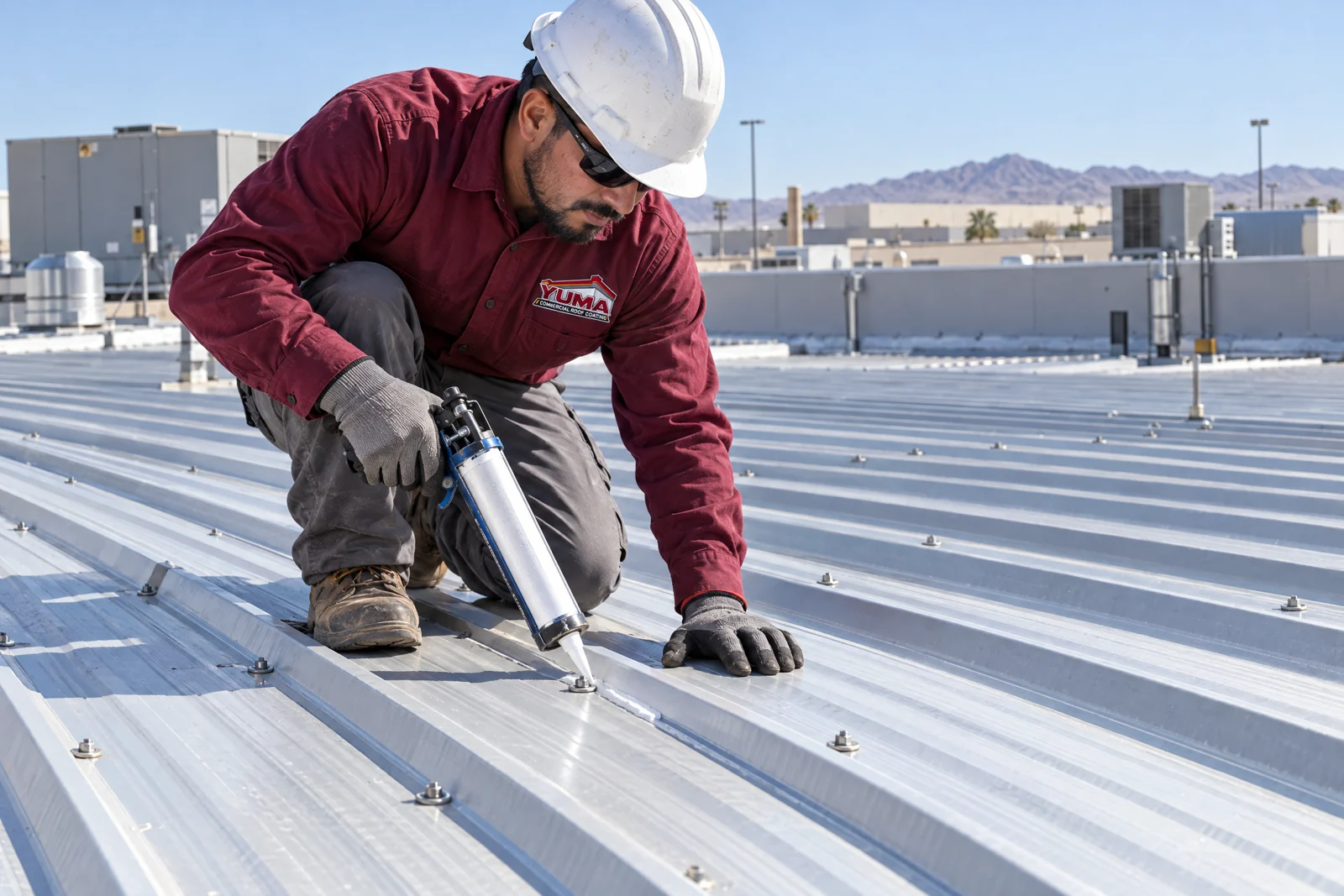
Fasteners hold panel connections together, but missing, loose, or failed fasteners can leave openings and allow movement. We address them before coating. A coating is not a substitute for a properly attached metal panel.
Panel joints and seams can separate as metal moves, creating leak paths that a surface layer will not solve. The joint needs inspection, repair, and detail treatment before the panel field receives coating.
Rust must be evaluated for extent and effect on the sheet metal. Limited corrosion may require cleaning, treatment, and compatible primer work. When corrosion has weakened broad areas, keeping the panels may no longer be the right restoration choice.
Dents, punctures, torn sections, and distorted panels can create a repair boundary. We separate sheet-metal repairs from areas that can accept coating. The goal is a stable roof surface, not a new color over damaged metal.
Pipes, curbs, equipment bases, and patches need their own check. Some repair materials need special preparation or compatibility work. Detail areas may require sealant or reinforcement unlike the coating across the main panels.
Metal is the focus here, but roof condition determines which coating system belongs in the conversation.
| Roof System | When It May Fit | Check Before Coating | Main Boundary |
|---|---|---|---|
| Metal Roof Coating | Repairable metal panels | Fasteners, seams, rust, patches | Loose or weakened panels need repair |
| Silicone Roof Coating | Suitable low-slope roof | Moisture, drainage, ponding | Damaged base still needs correction |
| Acrylic Roof Coating | Compatible, well-drained roof | Prior coating and drying conditions | Dry climate alone is not enough |
| Spray Foam Roofing | Dry, secure substrate | Moisture, overspray, topcoat needs | Wet or exposed foam needs attention |
| Shingle Roof Coating | Commercial shingle system after inspection | Manufacturer compatibility and condition | Repair or replacement may fit better |
Coating is useful when the existing metal roof is a sound, repairable base. These qualified benefits depend on condition, preparation, system choice, and correct application.
When the metal panels and supporting layers are suitable, coating can retain usable roofing instead of paying to remove and rebuild it. That cost opportunity disappears when corrosion, damaged decking, or loose assemblies make restoration unsound.
A qualified coating project may reduce demolition, debris handling, and work around occupied areas compared with full tear-off and replacement. Fastener repairs, seam work, cleaning, and detailing still carry real cost and must be included.
Leaving sound metal in place can avoid discarding roofing that remains serviceable. The waste reduction depends on how much of the assembly can stay; coating does not promise zero waste or eliminate damaged-material removal.
A maintained coating may be renewed with a compatible product when its condition allows. That can create another restoration option later, but inspection, preparation, and system compatibility still decide whether recoating is practical.
The work sequence answers three decisions: can the metal roof be coated, which system fits, and what preparation changes the cost over time?
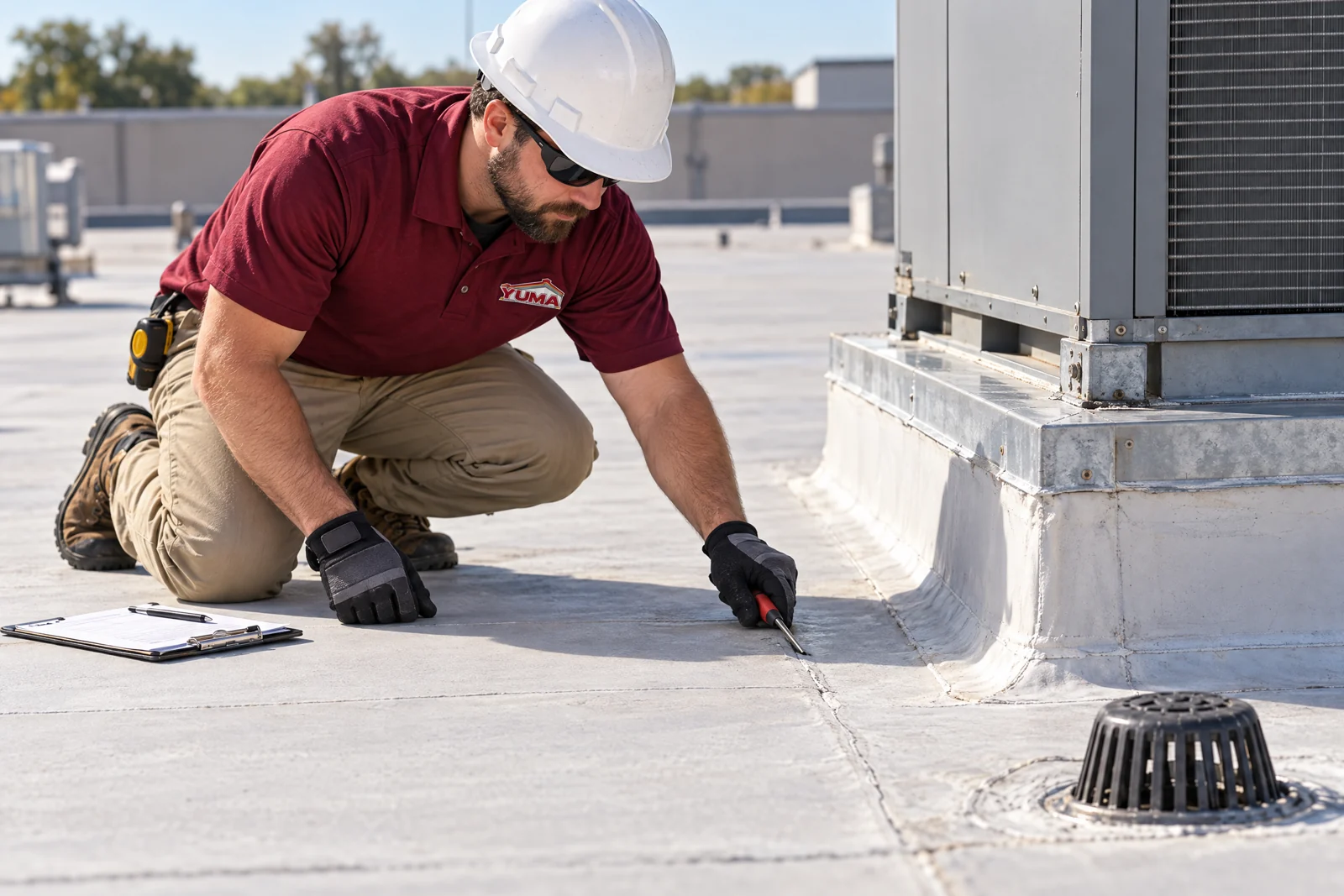
We identify the metal roof assembly, check panel condition, and trace signs of leaks. Fasteners, seams, rust, sheet metal, penetrations, and old patches establish the repair boundary before a coating system is selected.
Loose or missing fasteners, moving joints, open seams, damaged sheets, and failed details need attention first. The coating should protect a properly repaired metal roof, not hold loose panels together.
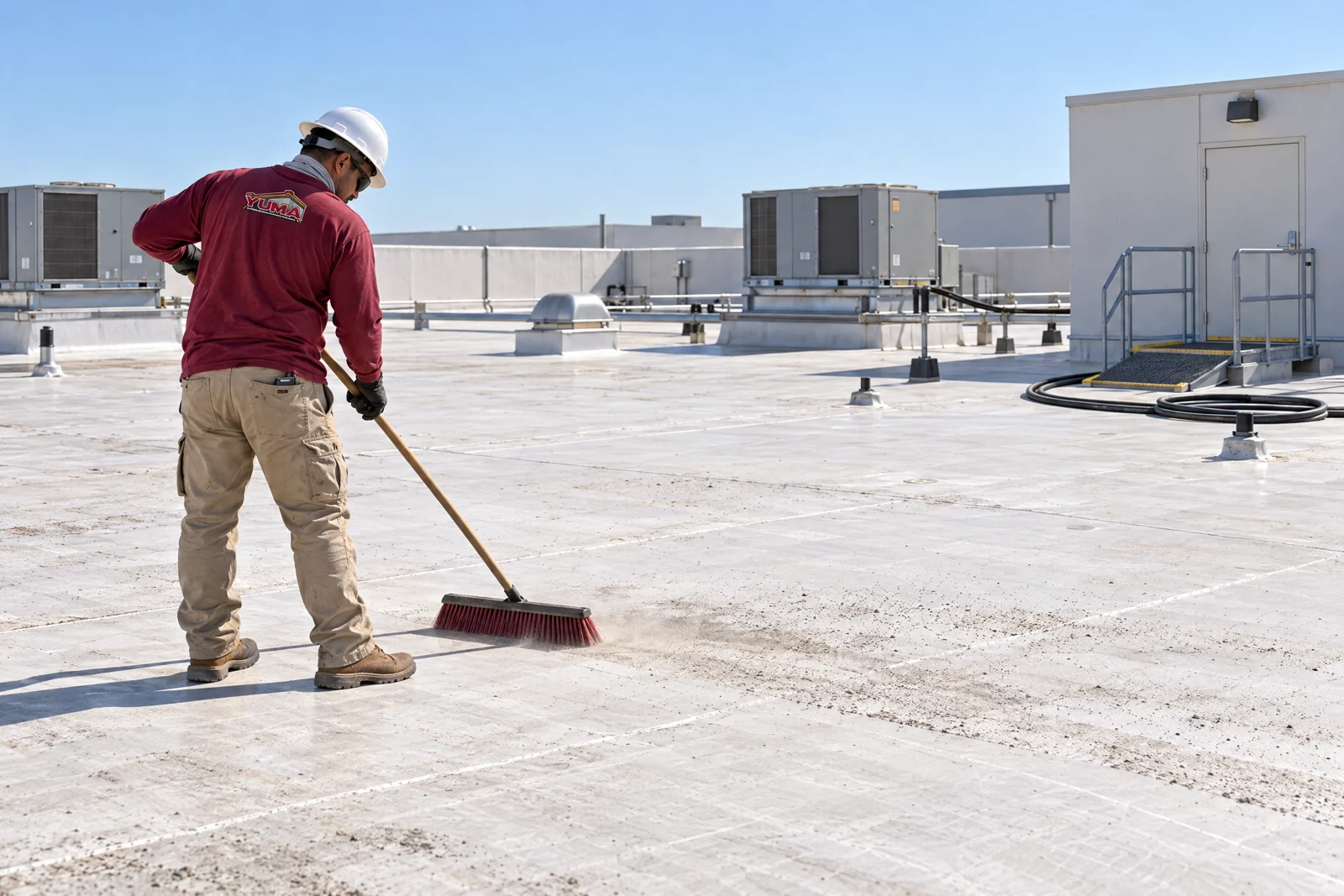
Preparation may include cleaning, rust treatment, compatible primers, sealant, reinforcement, and detail work around equipment bases, pipes, drains, and edges. The actual metal condition determines which steps apply.
We apply the selected coating to the prepared roof and follow its coverage and thickness requirements. Appearance alone does not prove enough material has been applied, so application checks matter.
Roof access, equipment servicing, deliveries, and occupied areas affect the work sequence. After coating, maintenance staff should wait until the product has cured enough for the intended use and keep drainage paths clear.
These answers address the preparation and repair questions that decide whether a commercial metal roof is ready for coating.
Yes. Metal roof preparation includes checking fasteners, panel connections, rust, and damaged sheet metal. Loose or missing fasteners need attention before coating. Rust treatment and suitable primers may also be required.
The coating should protect a properly repaired metal roof, not hold loose panels together. The panel details determine preparation; they cannot be treated like a smooth membrane surface.
Some can, but their condition and compatibility need checking. Loose repairs need attention, and certain materials require special preparation. An asphalt-based surface, for example, may need a bleed-blocking primer beneath a white coating.
Each old repair needs more than a quick glance. We identify what can remain, what needs preparation, and what must be corrected before the new coating is applied.
We first identify why the joint is moving and whether the panels remain repairable. The work may involve addressing fasteners, opening, damaged metal, and the joint detail before coating reaches the surrounding panel field.
A coating is not used to hide movement. The joint must be stable and properly detailed so the finished system protects a repaired roof rather than covering an active failure.
Corrosion is too extensive when the sheet metal has lost the condition needed to remain a sound coating base. We look at how broad the rust is, whether panels are weakened, and whether local repairs can restore the affected areas.
If the roof is coming apart or damaged across widespread areas, coating may be a poor choice. The honest decision may be repair or another roofing approach instead of preserving unsuitable metal.
No. Loose or missing fasteners need attention before the main coating goes on. Fasteners help hold panel connections together, and coating over a loose connection does not correct the movement or opening beneath it.
We check the affected fasteners and surrounding metal, then include the needed repair in surface preparation. The coating follows a properly attached and detailed roof.
They affect the work sequence, protected areas, and access plan. Tell us which equipment must remain running, where air intakes are located, and when maintenance or deliveries need roof access.
Equipment bases, pipes, drains, and roof edges may need detail work different from the open panel field. We coordinate the sequence around the building rather than assuming every area stays available throughout the job.
Tell us what your commercial metal roof is doing, where repairs show, and what access the building requires. We start with roof condition.