Commercial Roof Coating · Yuma, AZ+1 (928) 430-5699
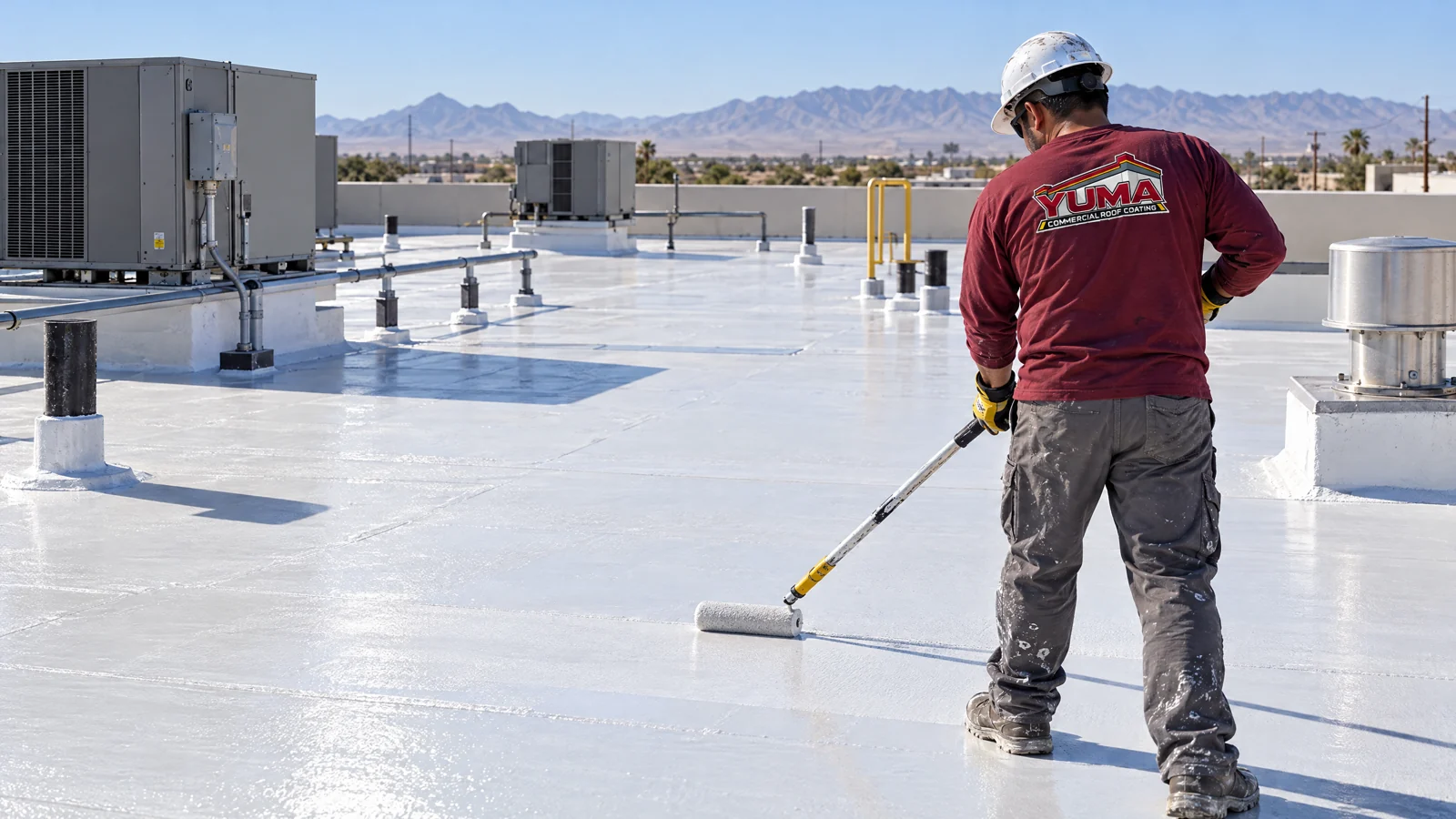
Worker applying a coating across a commercial low-slope roof

Commercial Roof Coating

Yuma Commercial Roof Coating Services

Which Coating Fits The Roof You Have?

Commercial roof coating services in Yuma, AZ start with the roof you have, the repairs it needs, and the system that fits.

Roof Types We Coat

We coat commercial roofs only after identifying the existing assembly, its repair limits, and the preparation needed for a compatible system.

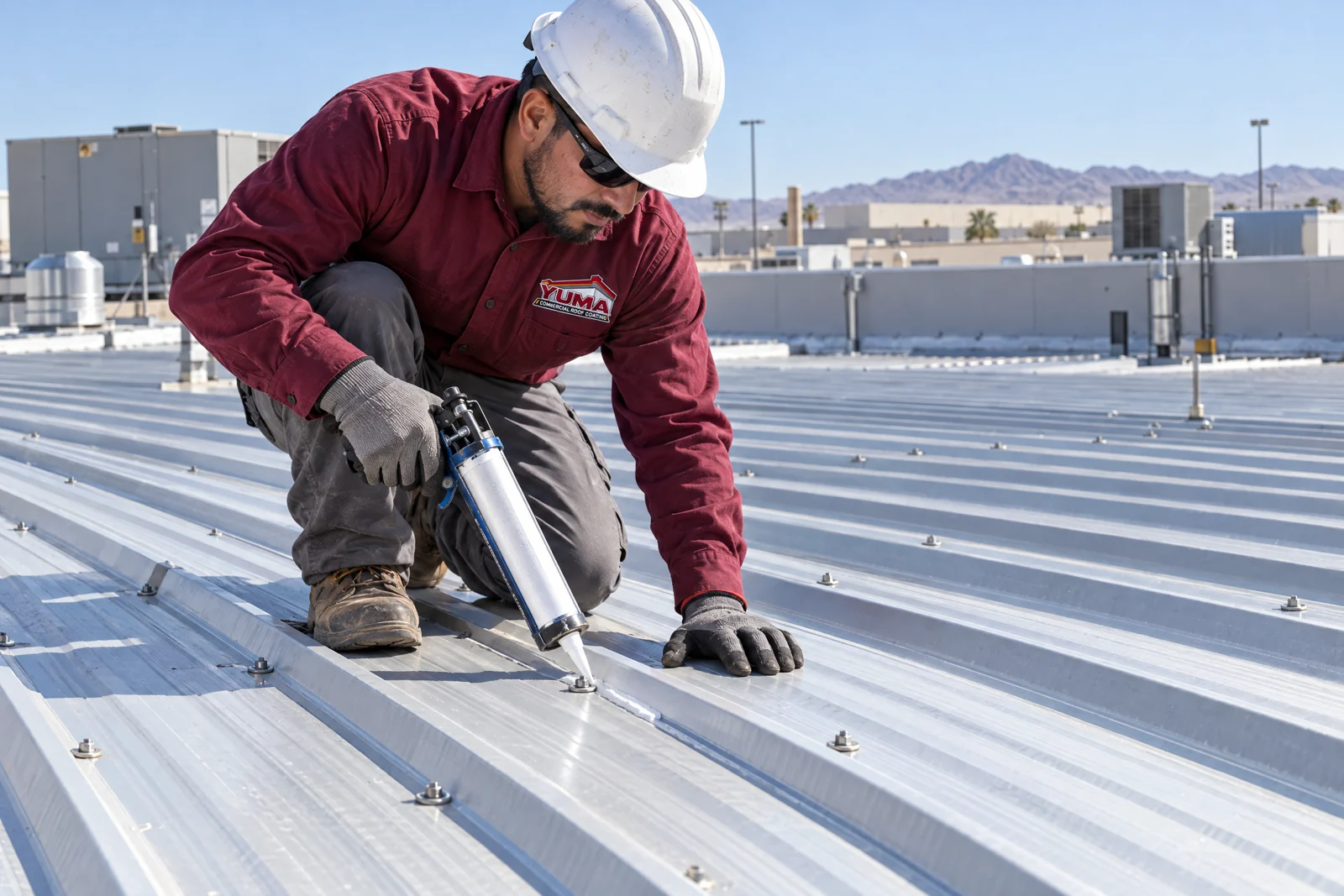
Worker sealing a joint on commercial metal roof panels

Metal Roof Coating

Metal coating starts with fasteners, panel connections, rust, seams, penetrations, and damaged sheet metal. We address loose or missing fasteners and use suitable primers before coating a properly prepared roof. We also look at movement around penetrations and equipment.

Explore Metal Roof Coating
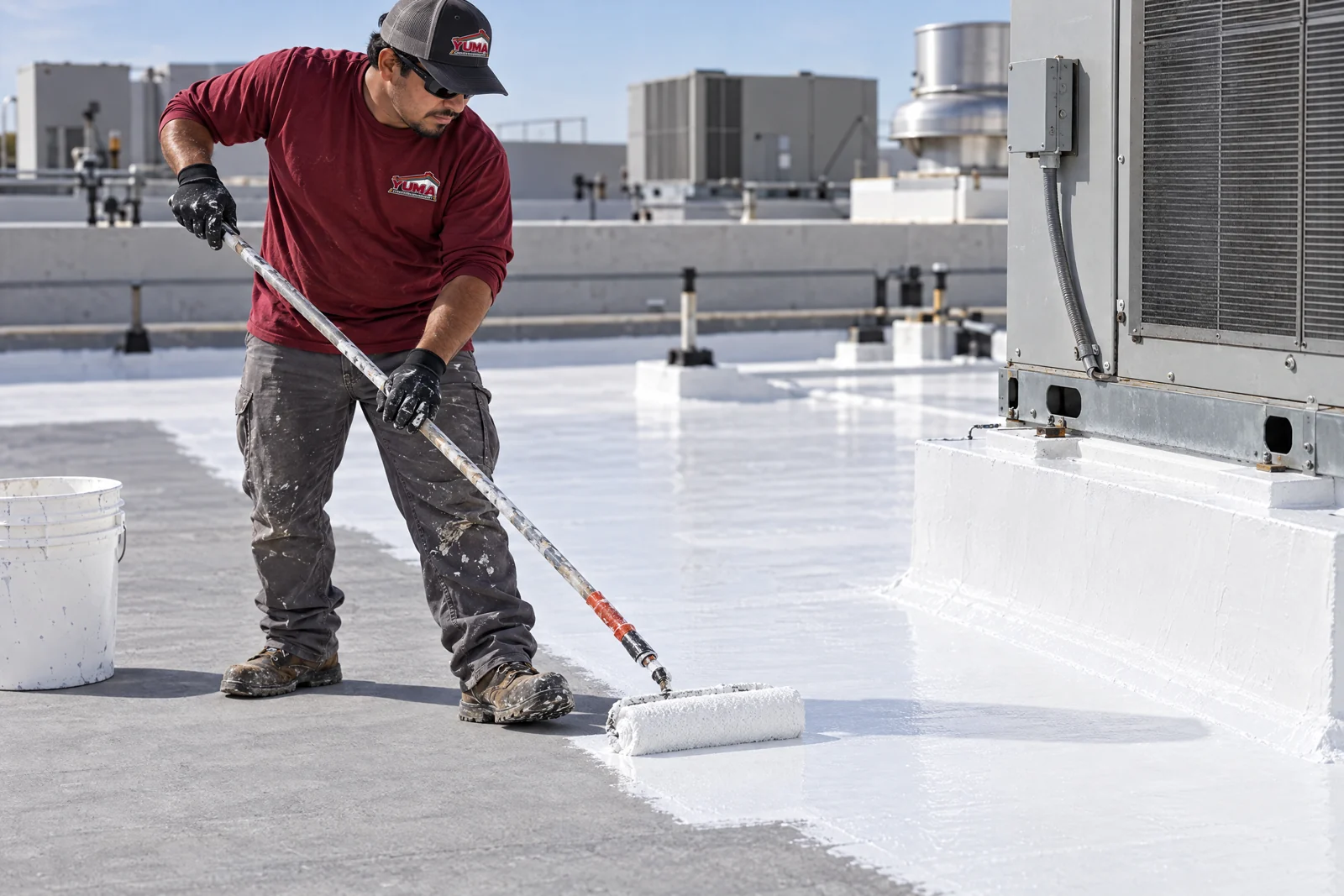
Worker rolling white coating around a commercial roof curb

Silicone Roof Coating

Silicone may suit a compatible low-slope roof where sunlight or standing water matters. We check moisture, drainage, substrate condition, previous coatings, and primer compatibility before application. Standing water does not remove the need to check the roof below.

Explore Silicone Roof Coating
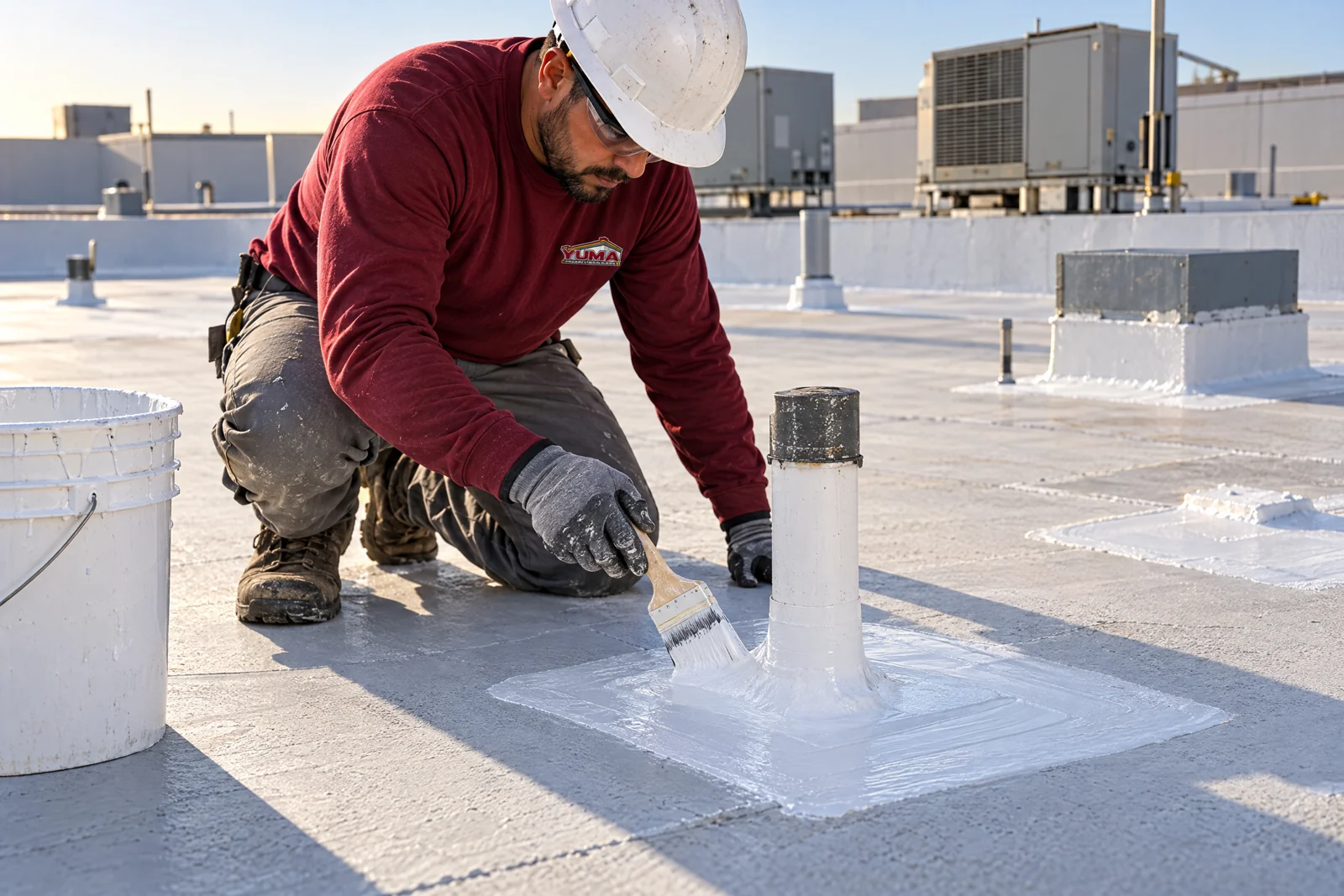
Worker brushing coating around a commercial roof penetration

Acrylic Roof Coating

Acrylic may fit a compatible roof with good drainage and a workable drying window. We check the existing material, old coatings, bleed-through, detail work, and conditions required for application. A coating does not correct poor drainage or unresolved roof damage.

Explore Acrylic Roof Coating
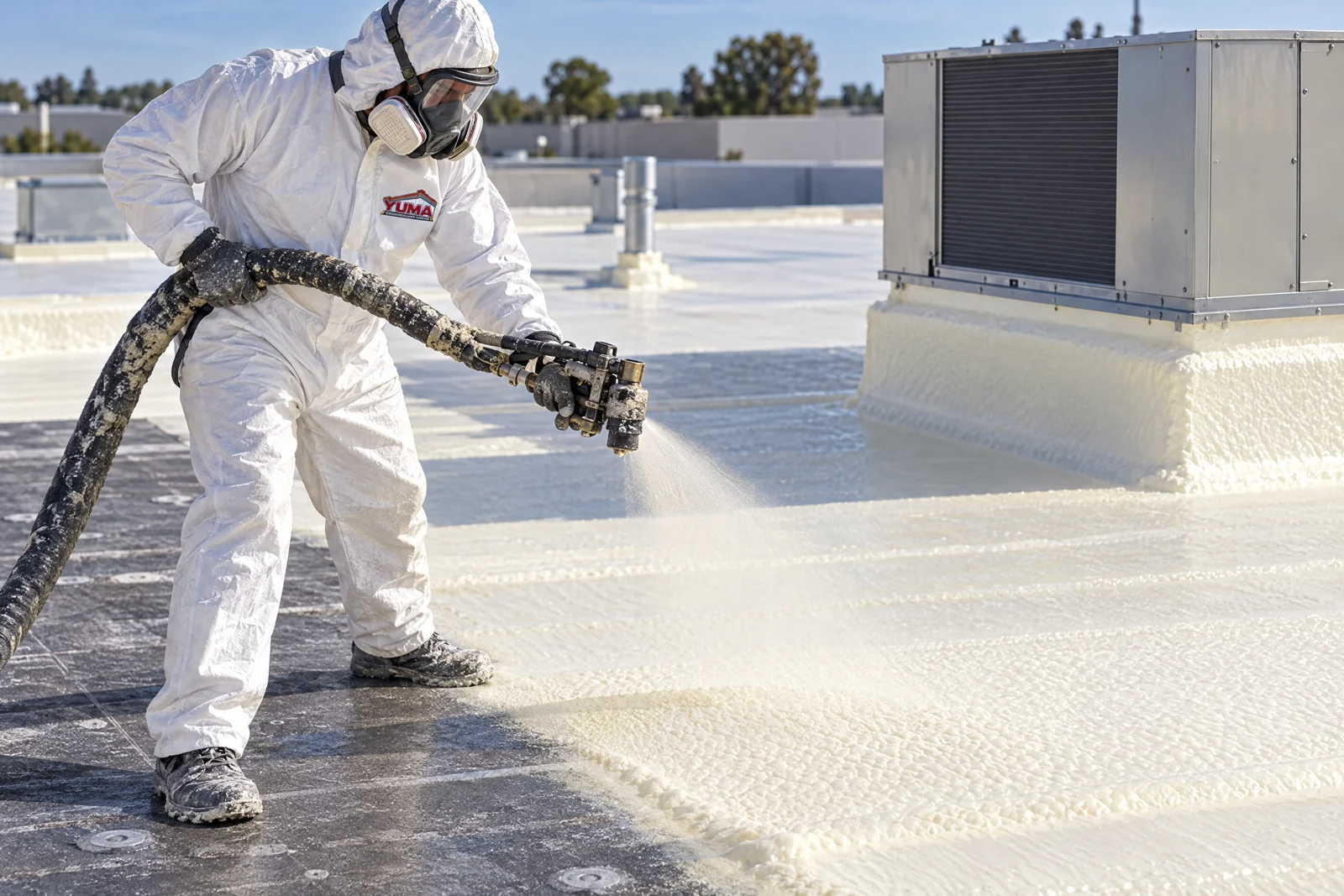
Protected worker applying foam on a commercial low-slope roof

Spray Foam Roofing

A sound foam roof may need repairs and a renewed protective coating rather than more foam everywhere. We inspect wet, exposed, or damaged foam and address those areas before deciding where added foam belongs.

Explore Spray Foam Roofing
Worker inspecting shingles and flashing on a commercial building

Shingle Roof Coating

Shingle coating has a narrow inspection gate. We check shingle condition, manufacturer compatibility, code requirements, and whether repair or replacement is more appropriate before coating is considered. A compatible product is not assumed from shingle appearance.

Explore Shingle Roof Coating

Which System Fits Which Roof

The existing substrate, water behavior, repair boundary, and application conditions narrow the practical coating choices for each commercial roof.

Roof Or ConditionWhat We CheckService Direction
Metal roofFasteners, seams, rust, damaged panels, penetrations, and panel movement.Repair loose connections and use suitable primer before coating.
Low-slope membraneMoisture, drainage, prior coatings, substrate condition, and low areas.Address wet areas and drainage concerns before choosing a compatible coating.
Gravel-covered roofRoof assembly, attachment, loose surface material, and existing layers.Do not apply standard coating over loose gravel; special preparation or another method may be needed.
Foam roofWhether the foam is sound, dry, exposed, or damaged.Repair exposed areas and renew protection; add foam only where inspection supports it.
Commercial shinglesShingle condition, compatibility, code requirements, and repair boundaries.Coat only when the assembly is suitable; repair or replace when it is not.

How Yuma Commercial Roof Coating Services Work

We move from roof condition to system choice, then from preparation to a checked application that fits the building and its daily operations.

  1. 01

    Inspect Your Roof

    We identify the roofing material, visible damage, seams, fasteners, flashings, drains, penetrations, and equipment bases. We note leak locations, previous repairs, access limits, and areas needing closer investigation before selecting a coating. We record conditions that affect sequencing and work areas.

  2. 02

    Identify Substrate And Moisture

    A dry top surface does not prove that layers below are dry. We investigate uncertain or wet areas and separate sound roofing from saturated insulation, which generally needs removal and replacement before coating. Moisture findings control whether coating work can proceed.

  3. 03

    Set Repair Boundaries

    We separate coating-ready areas from leaks, loose materials, damaged decking, failing layers, low spots, and details needing repair. Coating follows required repairs; it does not hold loose panels together or rebuild a roof. That boundary protects the coating from covering unresolved roof problems.

  4. 04

    Select A Compatible System

    We compare the existing material, prior coatings, drainage, sunlight exposure, surface condition, and product requirements. Metal, silicone, acrylic, foam, and shingle routes each have different preparation and compatibility gates. The product is chosen after those checks, not before.

  5. 05

    Prepare Details And Coordinate Access

    Preparation can include cleaning, repairs, primers, reinforcement, sealant, and treatment around edges, pipes, drains, and equipment bases. We account for roof access, deliveries, parking, HVAC intakes, tenants, and restricted areas. Detail work is part of preparation, not a finishing afterthought.

  6. 06

    Apply, Check, And Plan Maintenance

    Application follows the selected system’s coverage and thickness requirements, not appearance alone. Wind, dust, heat, rain, and curing conditions matter. We also identify access rules and maintenance checks suited to the installed coating. Coverage checks help confirm that appearance is not the only measure.
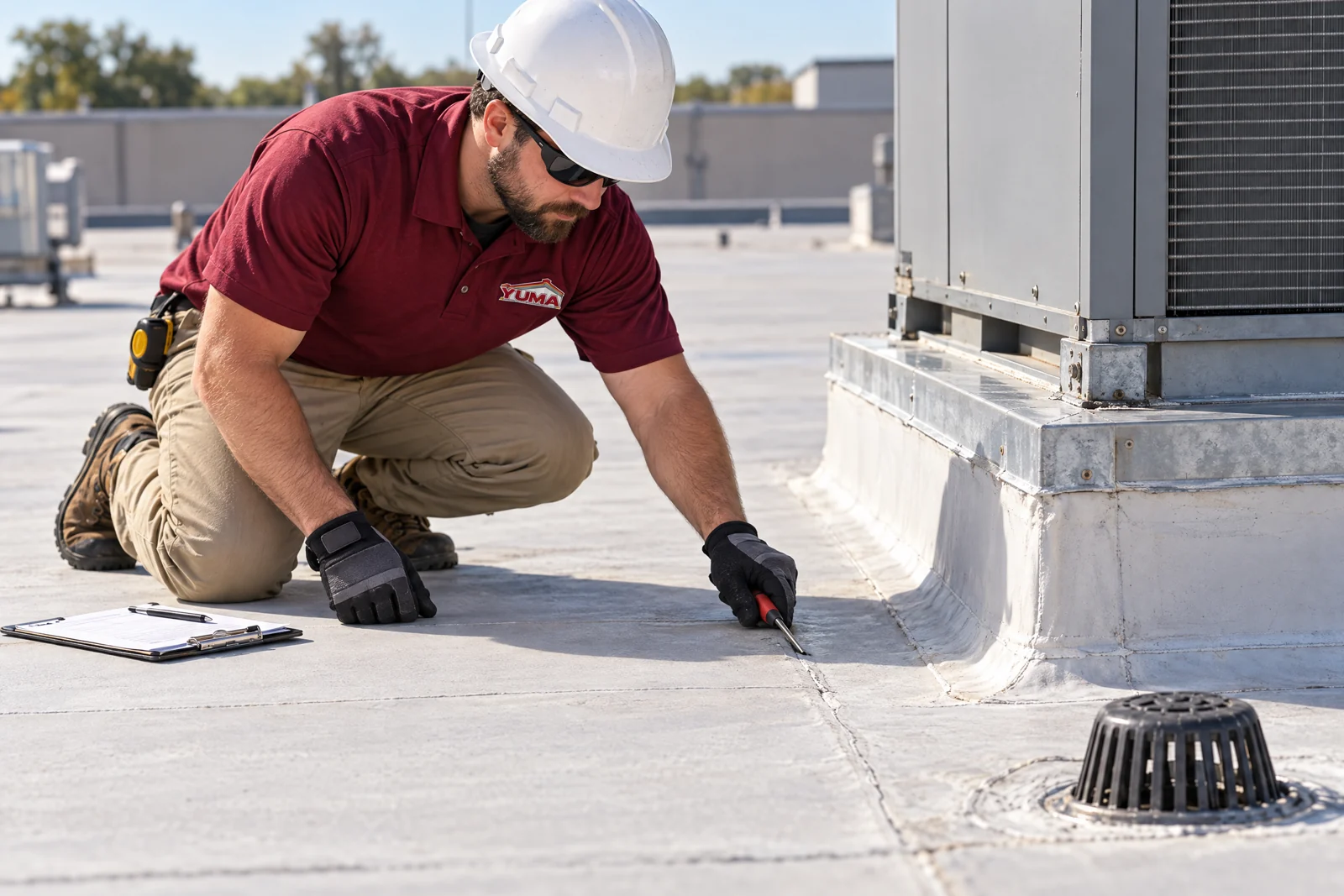
Worker checking membrane seams near commercial rooftop equipment

Commercial Roof Coating Service Questions

These answers cover the system, repair, preparation, and access questions that matter before a commercial roof coating service is selected.

What Does Your Commercial Roof Coating Service Include?

We inspect the roof, identify repairs, prepare the surface, and apply a coating suited to the existing roofing material. The work is not a fresh coat over whatever is there, because the roof needs a sound and prepared base.

Loose materials, leaks, and damaged areas need attention before the main coating goes on. The roof’s condition controls the work sequence, preparation steps, and system choice.

Can a Commercial Roof With Gravel on Top Be Coated?

Not with a standard coating application over loose gravel. A gravel-covered roof needs a closer review to identify the roof assembly, attachment, and condition before deciding whether special preparation or another restoration method is needed.

We do not treat that surface like a smooth membrane roof. The existing layers and how much sound roofing can remain determine the practical direction.

How Do I Choose Between Silicone, Acrylic, And Another Coating System?

Choose from the roof that exists, not from the product name alone. Drainage, standing water, substrate, prior coatings, moisture, sunlight, detail conditions, and application limits all affect the system direction.

Silicone may suit a compatible roof where standing water matters; acrylic may suit a compatible roof with good drainage and a workable drying window. Metal, foam, and shingle roofs have separate inspection gates.

When Does A Commercial Roof Need Repair Before Coating?

Repair comes first when leaks, loose materials, damaged decking, failing layers, open seams, missing fasteners, or damaged details keep the roof from being a sound base. Those conditions need a clear boundary before coating work begins.

A coating cannot rebuild wet insulation, damaged decking, or roofing that is coming apart. We separate repair work from areas that are suitable for preparation and coating.

Can Ponding Water Be Solved With A Thicker Coating?

No. A standard coating is not a roof-leveling material. Low areas need investigation of where water goes and why it collects, followed by drainage corrections or other roofing work when necessary.

Adding more material does not replace a plan for getting water off the roof. Water behavior remains part of the system decision and the maintenance plan.

What Should Be Checked On A Metal Roof Before Coating?

Check fasteners, panel connections, seams, rust, damaged sheet metal, penetrations, and movement before coating. Loose or missing fasteners need attention, and rust treatment or suitable primers may be required for the selected system.

The coating should protect a properly repaired metal roof. It should not hold loose panels together or hide unresolved connection problems that need repair first.

Can Several Roof Types At One Property Use Different Systems?

Yes, different buildings or roof sections may need different systems when their substrates and conditions differ. A shared property address does not mean every roof has the same preparation or coating needs.

We keep each building or section distinct, including its access points, repairs, equipment, drainage, and operating constraints. The system choice follows those actual conditions.

What Information Helps Compare Coating Options?

Useful information includes the property address, roof material, leak locations, previous repairs or coatings, roof access limits, photos, maintenance records, and any warranty paperwork. Those details help identify what needs checking before coating.

Also identify multiple buildings, restricted areas, deliveries, HVAC equipment, planned solar work, and spaces that must stay available. Access and sequencing can affect preparation and system fit.

Get An Estimate For Your Commercial Roof

Tell us what the commercial roof is doing now, what must remain in operation, and which areas need attention. Get a free estimate or call us.

Call Us

Before You Go

Want To Talk About The Roof?

Leave a name and phone number, or call directly when you are ready.

Call Us

Read our Privacy Policy.