Commercial Roof Coating · Yuma, AZ+1 (928) 430-5699
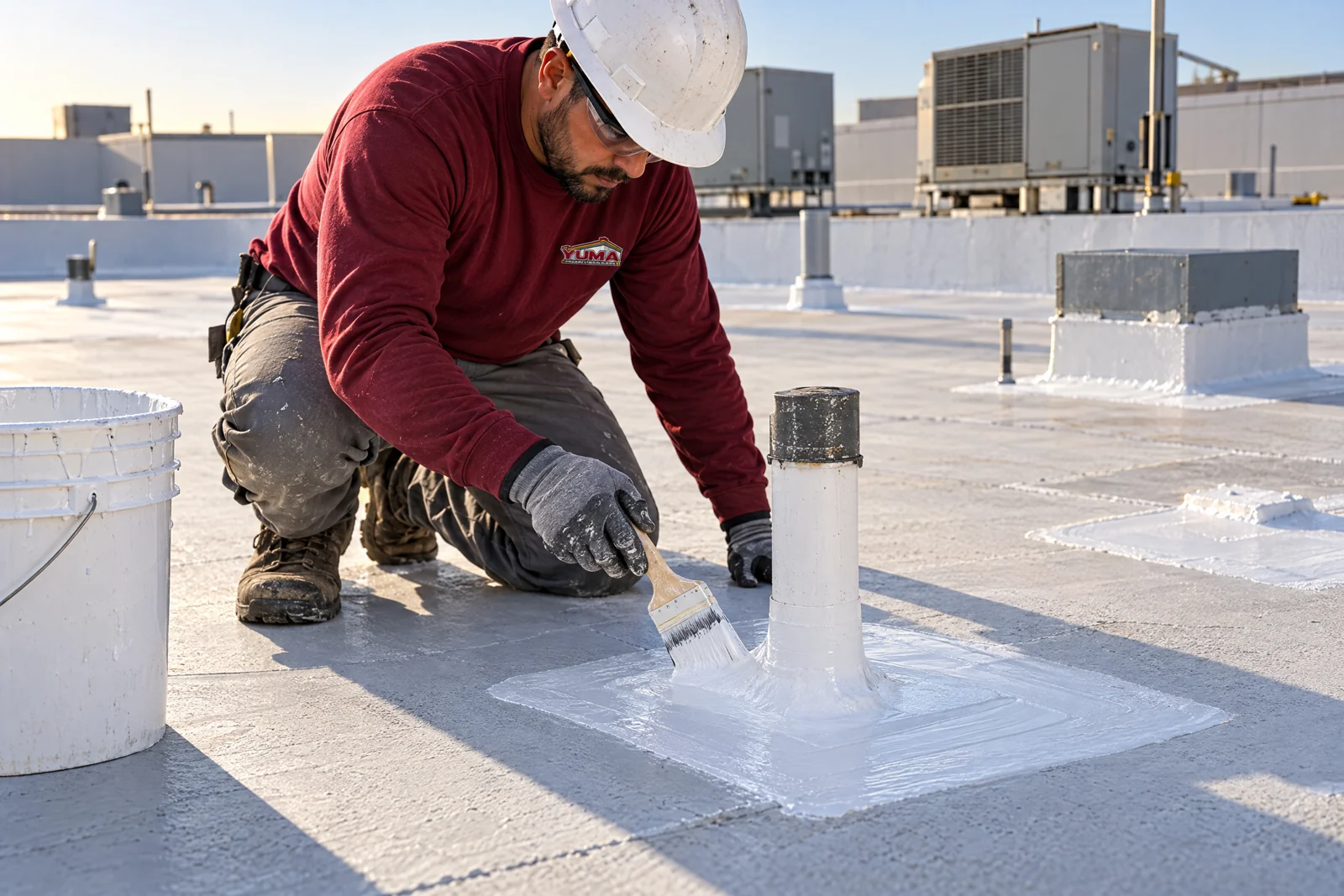
Worker brushing coating around a commercial roof penetration

Commercial Roof Coating

Yuma Acrylic Roof Coating

Will Drainage And Drying Conditions Support Acrylic?

We perform Yuma acrylic roof coating on compatible commercial roofs in Yuma, AZ, after checking heat, drainage, old patches, surface condition, and the dry-weather window.

Surface Condition

Roof and substrate checked

Drainage

Low areas investigated first

Dry Window

Required for application and cure

Old Patches

Prepared for compatibility

Is This Roof A Fit?

Acrylic is considered after the existing roof, water movement, old repairs, and application conditions are understood.

01

Acrylic May Fit

  • Compatible roof surface remains attached
  • Drainage works without persistent low spots
  • Existing coating can accept the system
  • Surface can be cleaned and prepared
  • Weather allows drying after application
  • Roof details can receive proper treatment
02

Repair Or Another System First

  • Widespread wet insulation needs attention
  • Damaged decking cannot be coated over
  • Roof layers are coming apart
  • Water collects in unresolved low areas
  • Asphalt patches may bleed through without preparation
  • Existing material is not compatible

Roof Conditions That Control Acrylic Coating

Four roof conditions can change whether acrylic is practical, what preparation is needed, and when the work can proceed.

Hot Roof Surfaces

A roof can be too hot for a selected product even when the air feels workable. Application limits and actual roof conditions control the work window. The crew should not choose a product first and force the roof to fit it. Timing may shift to another part of the day.

Rain, Wind, And Dust

Acrylic needs a suitable dry period after application. Wind can make work unsafe, while dust can settle on a prepared surface and require cleaning again. A forecast without rain is not enough when wind, dust, and drying time could affect adhesion or cure.

Low Areas And Ponding

Acrylic is not a roof-leveling material. Water that collects after rain points to drainage, slope, or roof-condition questions that must be addressed first. Adding more coating to a low spot does not replace a plan for moving water off the roof. Drainage work remains separate from coating.

Asphalt Patches And Old Coatings

Old patches need more than a quick glance. Asphalt-based areas may need bleed-blocking primer beneath a white coating, while worn or uncertain prior coatings need compatibility checks. Loose repairs and damaged details must be corrected before the open roof is coated. Compatibility is confirmed before broad application.

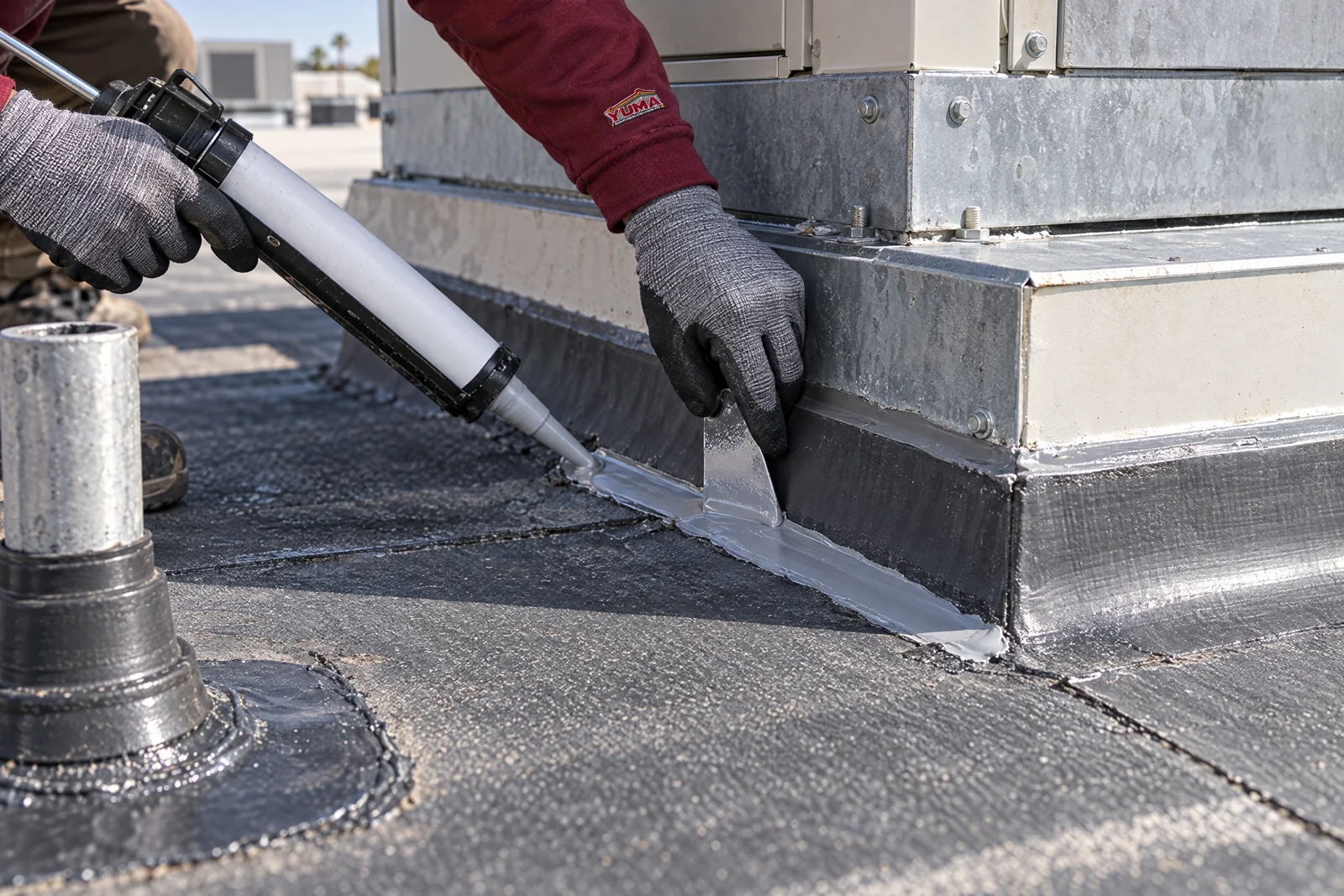
Gloved hands preparing flashing around a commercial roof curb

Commercial Roof Coating Options for Yuma

The right system depends on the existing roof and the condition that must be addressed. Compare the approved service paths before choosing acrylic.

ServiceMay SuitKey Check
Acrylic Roof CoatingCompatible roof with workable drainageHeat, drying window, patches, and prior coating
Silicone Roof CoatingSuitable roof where standing water mattersMoisture, drainage, substrate, and primer compatibility
Metal Roof CoatingRepairable metal panels and connectionsFasteners, seams, rust, and damaged sheet metal
Spray Foam RoofingDry, secure substrate needing foam restorationMoisture, exposed foam, detail preparation, and overspray controls
Shingle Roof CoatingOnly where the roof and system are compatibleManufacturer requirements, code review, and narrow inspection gate

Benefits of Coating Your Roof

When the roof qualifies, coating can preserve usable roofing and create a restoration option without pretending every roof should be coated.

Keep Sound Roofing In Place

Keeping attached, serviceable roofing in place may avoid removing and rebuilding sound areas. That can reduce material and labor work compared with replacement when the roof qualifies. Inspection and repairs come first; wet insulation, failed decking, or separating layers need a different answer.

Avoid Discarding Usable Roofing

If sound sections can stay in place, coating may avoid discarding usable roofing during a full tear-off. The amount of material kept depends on roof condition and repair scope. Coating is not a promise of zero waste; damaged layers still need removal when necessary.

Limit Tear-Off Disruption

When most of the existing roof can stay, the work may involve less demolition and debris handling than a full tear-off. Cleaning, repairs, access controls, and detail work still require coordination around the occupied building.

Keep Recoat Options Open

A compatible coating may be renewed later when its condition allows. Future recoating is an option to assess after inspection and preparation, not a promise that the roof will never need repair or replacement.

Yuma Acrylic Roof Coating Process

The work sequence follows roof condition first, then preparation, weather, application, and coverage checks.

  1. 01

    Inspect Your Roof

    Identify the roofing material, worn areas, old coatings, asphalt patches, seams, drains, penetrations, and signs of moisture. The inspection determines whether acrylic fits and which repairs or tests come first. We do not select acrylic before these conditions are understood.

  2. 02

    Repair And Prepare Details

    Address loose materials, leaks, damaged areas, and unsuitable repairs before the main coating. Clean the surface, treat required details, and use compatible preparation where old asphalt or prior coatings could affect the finished system. Sealants or reinforcement may be needed at details.

  3. 03

    Confirm The Application Window

    Check the selected product’s temperature and drying requirements against the roof, air, wind, dust, and rain conditions. Work may need a different part of the day or a different weather window before coating begins.

  4. 04

    Apply And Check Coverage

    Apply the selected system to its required coverage and thickness, treating edges, drains, pipes, and equipment bases as needed. A roof can look covered before it has enough material, so application checks matter. Wait for cure before maintenance access.

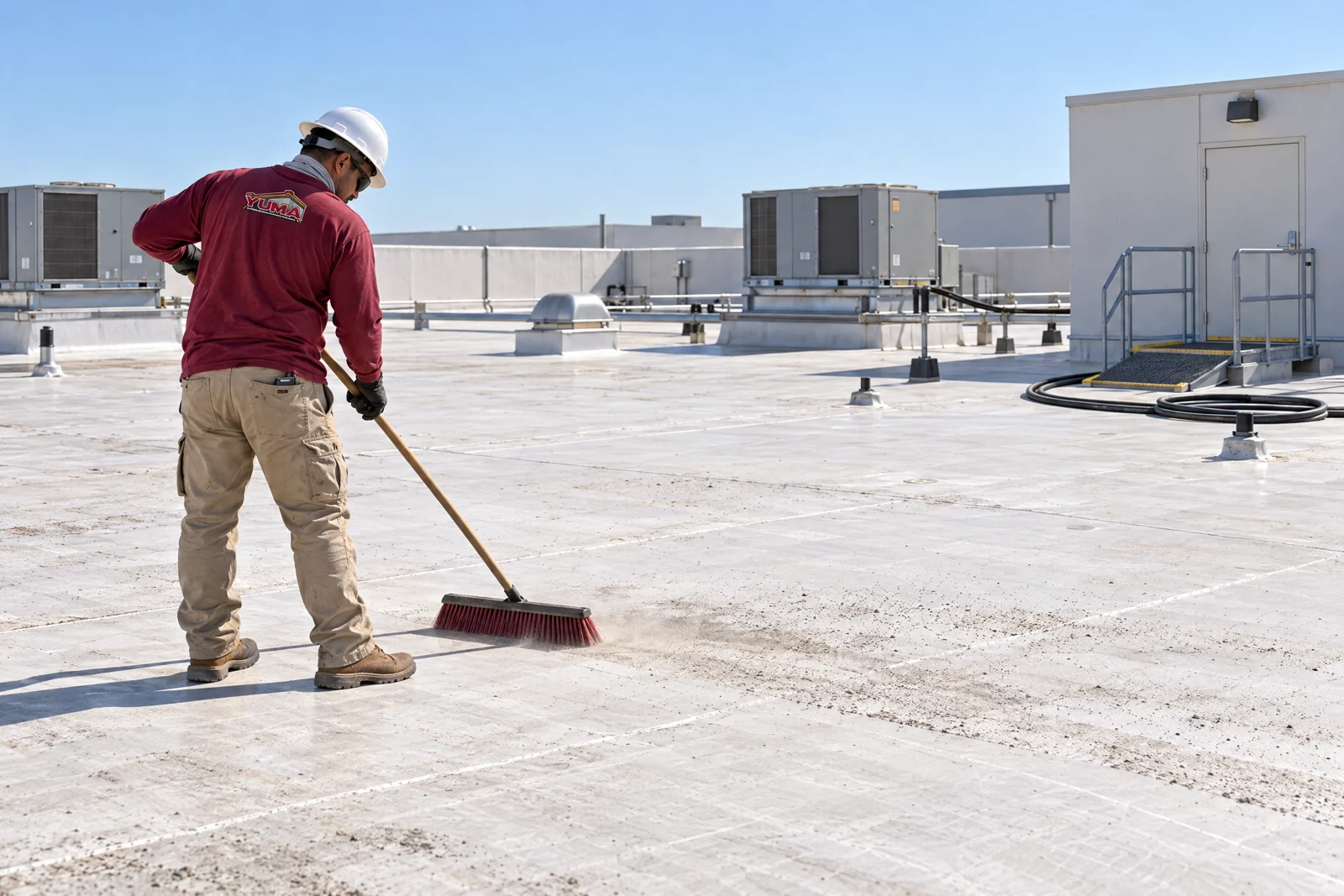
Worker clearing surface dust from a commercial roof

Acrylic Roof Coating Questions

These answers address the roof conditions and application decisions that most often change an acrylic coating scope.

Does a Dry Climate Make Acrylic the Best Choice?

No. Acrylic may work on a compatible commercial roof with good drainage, but a dry climate is only one part of the decision. We also check the existing material, previous coatings, water collection, and the product’s drying requirements.

Heat, wind, dust, and rain can still affect the application window. Acrylic is selected after the roof condition and weather conditions fit the system, not simply because Yuma is dry.

Can the Roof Be Too Hot to Coat?

Yes, depending on the product. We check the coating’s application limits and the actual roof conditions rather than relying only on air temperature.

If the roof is outside those limits, work may need a different part of the day or another suitable weather window. Hot roof surfaces can change the work window.

Can Acrylic Coating Be Used Where Water Collects After Rain?

It depends on why water collects and whether drainage can be corrected. Acrylic is not a leveling material, so adding thickness to a low spot does not solve the water path.

We check drains, low areas, roof slope, and the underlying condition before deciding whether acrylic fits or another repair or coating system should come first. Drainage correction is separate roofing work.

Do Asphalt Patches Need Special Preparation Before Acrylic Coating?

Yes. Asphalt-based patches may need a bleed-blocking primer beneath a white acrylic coating, and loose or failing repairs need attention before coating.

Each patch is checked for attachment, condition, and compatibility. A quick color match is not enough preparation for the open roof or its details. Primer selection depends on the patch and coating system.

How Long Does An Acrylic Coating Need To Stay Dry After Application?

The required dry time depends on the selected product and actual roof conditions. Rain, wind, dust, temperature, and humidity can all affect when the coating is ready for exposure.

We use the product requirements and the forecasted work window rather than promising a fixed return time. Maintenance access and equipment servicing should wait until the coating has cured enough for intended use.

What Roof Materials Can Receive An Acrylic Coating?

Only compatible roof materials with an attached, prepared surface should receive acrylic. The existing material, prior coating, repairs, drainage, and substrate condition all affect the decision.

We identify the roof assembly first instead of treating every commercial roof like a smooth membrane. If compatibility or underlying damage is uncertain, another system or repair may be more appropriate. Unknown substrate damage needs testing.

When Should A Worn Roof Receive Repairs Instead Of Acrylic Coating?

Repairs should come first when leaks, loose materials, damaged details, wet insulation, damaged decking, or separating roof layers are present. Coating cannot rebuild failed roofing layers.

A few repairable details may leave a roof suitable for acrylic after preparation. Widespread damage can make restoration a poor choice, so the decision follows the inspection rather than coating age alone. The repair boundary comes before product selection.

Get A Free Estimate For Your Yuma Commercial Roof

Tell us about the roof, its material, water conditions, old patches, and access needs. We will start with the roof’s actual condition.

Call Us

Before You Go

Want To Talk About The Roof?

Leave a name and phone number, or call directly when you are ready.

Call Us

Read our Privacy Policy.